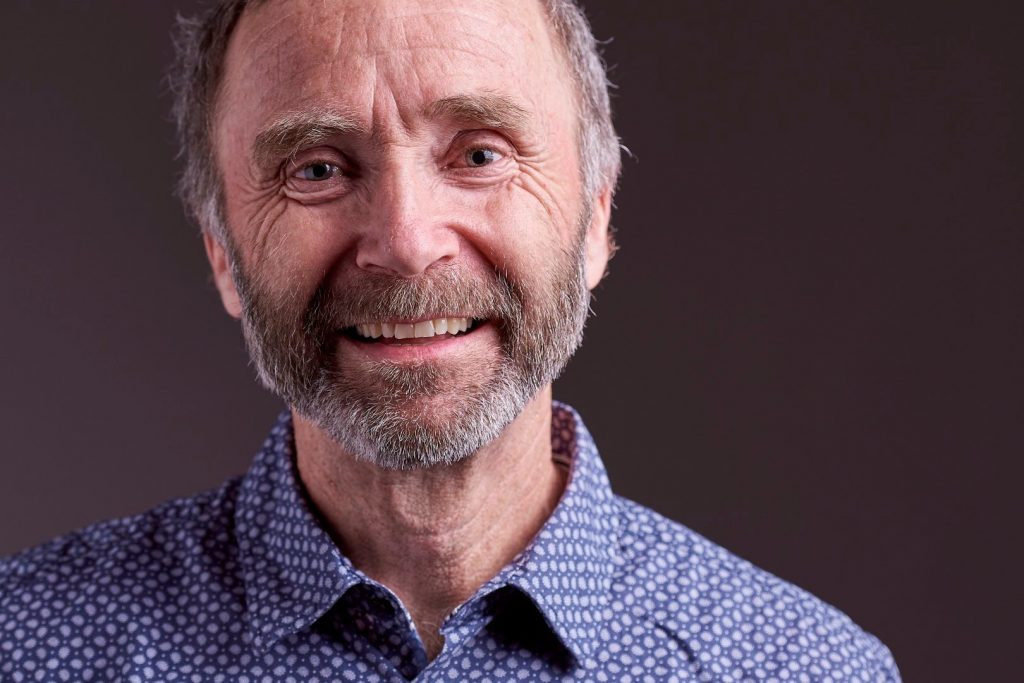
The first LSD study on human subjects of the new era of psychedelic research was conducted in Switzerland by psychiatrist and psychotherapist Peter Gasser. This study, which was sponsored by MAPS, has yielded promising results in the treatment of end-of-life anxiety in patients facing a life-threatening disease. In this interview, Dr. Gasser reflects on the methodology and findings of the study and on future perspectives.
Could you briefly describe your career, and what led you to pursue psychedelic research?
When I was training to be a psychiatrist and psychotherapist, at the end of the 1980s, I got in contact with psychedelic drugs for the first time. At the time, there were five therapists in Switzerland who were allowed to work with MDMA and LSD, and I first underwent treatment, and then followed training in psycholytic therapy. That’s how I learned that psychedelics can be of great help, not only to myself, but also to patients. In 1992, I became a member of the Swiss Medical Society for Psycholytic Therapy, and in 1996 I became the chairman of this society – I still am to this day. With the society, we tried several times to get permission to set up research projects with psychedelics. In 2000, we sought permission to treat depressed patients with psilocybin, but this project was not approved by the ethical committee, so we had to drop it. In 2004, one of our members received approval to use MDMA to treat patients with PTSD. And in 2007, I got approval to use LSD to treat patients with cancer or other life-threatening diseases who struggled with end-of-life anxiety. This study went on from 2007 until 2011, and we’re still publishing our findings.
How did you become interested in the treatment of end-of-life anxiety?
In 2006, we had a conference in Switzerland for Albert Hofmann’s 100th birthday. At the end of this conference, we sent an open letter to several governments in Europe to urge them to allow scientific research with LSD again. The Swiss ministry of health actually responded with a letter, saying that if the ethical and scientific requirements were met, they would grant permission for such a study. So we wondered what kind of study we could do, and we learned that in the 1960s, studies had taken place involving the treatment of end-of-life anxiety in cancer patients using LSD, with very good results. Stanislav Grof, for instance, published on this topic. So we figured we could take up the research where it had been left. On the other hand, we thought patients with life-threatening diseases really need a fairly quick approach for the problems they face. They don’t have time for long psychotherapeutic processes, and I think LSD is a good tool to quickly enter the core issues that emerge in the psychotherapeutic process.
You refer to previous studies, like Grof’s, and in one of your articles you state that “the present LSD study was designed to evaluate previous findings applying current research methodology.” What exactly is the difference in methodology as compared to previous studies?
Today, in the eyes of authorities, this is a drug study, although I personally consider this to be a psychotherapeutic study. Therefore we had to have a double-blind, placebo-controlled, randomized study design. In the 1960s, this was not the gold standard for this kind of research. So we had to go by today’s procedures that allow a scientific evaluation of the drug.
Regarding methodology, there’s a distinction in the article between the psycholytic and the psychedelic approach. Is it right to state you chose to remain somewhere in between, but leaning slightly more toward the psychedelic method? In other words, you use the psychedelic approach but with a slightly smaller LSD dose?
Personally, I don’t really like this distinction between psycholytic and psychedelic, which seems to be of historical rather than methodological relevance. What is important to me is the fact that there is a psychotherapeutic process. We have regular, verbal psychotherapeutic sessions with the patients, and we integrate the psychedelic experiences into that process. The dosage we gave was moderate, 200 µg, which in a way is indeed somewhere in between psychedelic and psycholytic when you look at these respective procedures in the 1960s. But I think the important point is to insert these sessions in the psychotherapeutic process, to prepare the patients for them, and then afterwards to help them integrate the LSD experiences. Psychedelic therapy in the 1960s was more about giving high doses of the drug and just assuming that the peak experiences they provided the patients with would initiate change by themselves. I think the psychotherapy is necessary for the experience to be integrated, but I wouldn’t say that makes our approach “psycholytic”. It’s more something in between, and maybe we should invent a new term, it’s more along the lines of “therapy with psychoactive drugs”, something like that.
Can you describe the setting you provided for your patients?
We tried to provide a somewhat meditative setting, with just the patient and two therapists: me and a female colleague. There were no eyeshades or headphones, but we did play music, with silence in between, near half the time. The silence allowed the inner process to develop, while the music was there at times to guide it. The patients could have their eyes open or closed, as they preferred. We mostly discouraged long discussions. We were available for the patients and they could talk to us, but we suggested leaving most of the talking for the next day: talking is slow, and the inner process is quite fast. Only one patient preferred to wear eyeshades for some time, otherwise patients would alternate between eyes open and eyes closed. The sessions took place in my office, and the session room was arranged quite comfortably with candles, flowers, and blinds to dim the daylight. So the setting was not medicalized, but there was a hospital only five minutes away in case of emergency.
Were you satisfied with the approach you took, or do you think there is room for improvement or further experimenting with different approaches?
Personally, I would like to have group settings, which I think are more efficient than individual treatment sessions. This allows for a group process, i.e. interaction with other people in the latter part of the session, and there’s also a kind of group energy that is different from the individual setting. We would like to do that in the future. Also, several patients indicated they would have liked to have more LSD sessions, and I agree with them. The fact that we only had two had to do with study reasons, but it would be better to have more.
In the article, you mention the high rate of strong emotional experiences in patients, and you suggest this to be the most efficient therapeutic trigger in the study.
Yes, we used a peak experience questionnaire, which revealed that some of the patients really had mystical experiences – but most of them didn’t, although they were very satisfied with their sessions and felt they benefited from them. So we wondered what the therapeutic principle of this therapy may be, and I would say it has to do with emotional opening and broadening of the viewpoint, seeing the whole of existence in a broader context, not only in a cognitive, but also in an emotional sense. Sometimes we had to go through difficult emotional processes, anxiety, despair, things like that. But I think it can be of great help to go through this kind of difficult emotions in a safe and supportive setting. In that sense, I would rather put the emphasis on the emotional processes than on the idea that it is necessary to have a mystical experience. Which is fine if it comes, of course, it’s really helpful and precious for people who have them, but I don’t think it’s required for the therapy to yield benefits.
How do you qualify the difference between emotional peak experiences and full-blown mystical experiences?
The elements of a mystical experience are precisely defined in the state-of-consciousness questionnaire. If one has a score of more than 60% on all of these elements, an experience is labeled mystical. But aside from that, I think a mystical experience is a feeling of great unity with oneself, with the people around you, with the whole of existence and creation. It’s an experience of unity that’s not tied to any religion. Not all of the patients had experiences like that. Strong or peak emotional experiences are more related to the person, to their history, personality and individual life situation.
Do you think it’s important to determine the biological mechanisms of action, or is this secondary to you?
I’m not a researcher – I’m a therapist – so for me this is secondary. The most important thing for me is to see to it that it works, and the question about why it works and what happens exactly in the brain comes second. I think you can do the therapy without knowing what happens in terms of neurotransmitters, for instance. But of course, on a scientific level, this is interesting in its own right.
The outcome of your study seems to be very promising: all of the patients experienced a definite improvement. Could you describe how the LSD experiences affected the patients?
They were more relaxed, in a sense. Even though their life was threatened by a disease in a relatively short term, they said they felt more relaxed. This is not just a superficial sense of relief, like the release of muscular tension. It’s on a more existential level. They felt it really broadened their mind, and that’s what they really appreciated about this therapy. Many of them said they learned to decide what really matters, what’s really important to them for the time that remains, and what they want and don’t want to do with this limited time that’s left for them.
The article also states that the results of your study are “flatter” than those of past research in the same area, which have shown “dramatic” improvement in about 1/3 of the patients, “moderate improvement” in another 1/3, and no improvement at all in the remaining 1/3. In your study, all patients experienced a significant and lasting improvement. How do you explain this difference?
First of all, the results we obtained with only 12 patients cannot be generalized, our sample was too small for that. So maybe our findings are not significant. Maybe the fact that no-one had dramatic improvements, but on the other hand none of the patients dismissed the therapy as having no effect at all, was just a chance event. On the other hand, I think what we do is closer to standard psychotherapy than to classic psychedelic therapy, where patients take a higher dosage and the experience is more dramatic, but the result maybe isn’t as long-lasting. With the moderate dosages we administer, the experience may not be as dramatic, but hopefully the effects are more sustainable. I think we’re not seeking dramatic changes as much as past researchers were, but rather sustained changes.
Another remarkable outcome was the lowered score for trait anxiety, which was sustained in the long term. Does this mean these people have experienced a stable change toward a less anxious personality?
Yes, this seems to be the case, because when we made a long-term evaluation of our results, we also reran the anxiety questionnaire, and we still had the same results as just after the LSD sessions. So we can say that in general the patients were less anxious, not only regarding state anxiety, which is more dependent on one’s present situation, but also regarding trait anxiety, which has to do with personality structure. This is extraordinary, in the sense that we only had two LSD sessions with each patient, and nevertheless there seems to be a deep change in attitude in the patients.
This finding is interesting in that it implies that this kind of treatment could potentially benefit a broader population, not just patients with life-threatening diseases.
Yes, of course, I agree. We have chosen this population because, as I said, the research had already been done, and we had to choose a specific population in order to carry out the research. But I think there are a lot of people who could benefit from this kind of therapy outside of this specific group of patients. Also, this is not only about anxiety. We measured anxiety because it’s easy to measure, but this therapy impacts the whole personality.
You mentioned past research by Stanislav Grof, who has developed one of the few models of the psychedelic experience, with a strong emphasis on perinatal experiences, which he also used in his work with terminally ill patients. Were you interested in testing this model in your study?
No, we didn’t verify this, for several reasons. I think it’s an interesting model, but it’s also kind of a hypothesis. It’s Grof’s system, his way of looking at what happens, and I think one can look at what happens under other premises. We do not put that much emphasis on verifying theories, this is not our aim. Also, Grof’s theory doesn’t fit my personal therapeutic background very well, which is less psychoanalytical.
In a previous interview, Matthew Johnson from Johns Hopkins University told us that end-of-life anxiety would be the first indication for which psychedelic treatment would become available as a legal option. He suggested this might happen in as little as ten years in the US. Do you share his optimism?
No. I think at the moment we live in a great era for psychedelic research, because there’s a lot going on worldwide, or at least in several countries in the world. It’s really my hope that we are at the edge of a true restart of psychedelic research. Nevertheless, this is not a mainstream process. I mean, at the moment, we’re lucky that we can go on, but there are obstacles to be overcome to establish these therapies. For instance, there’s no perspective that LSD could become a prescription drug. Maybe, in the best case, I think LSD could move from Schedule I to Schedule II or III, which means one can obtain exceptions for treatment under certain circumstances. But then it would still be available only for exceptional cases. To become a standard treatment, you should have a real option to treat people regularly with LSD, outside of scientific research premises. And to go the whole way from research to treatment, without having to register the drug, is quite a tricky thing. So I’m not sure Matthew Johnson is right, but if he is, and I’m wrong, I would really be happy. With MDMA it’s a bit different. MAPS is really working to make MDMA a prescription drug. And maybe in 10 years, PTSD could be treated with MDMA as a regular treatment. But I think with psychedelic drugs like psilocybin or LSD this will not be the case.
Your study was the first study on LSD in human subjects after decades. How do you explain the fact that, although LSD is a ‘classic’ psychedelic, it took this long to see it come back to the forefront of this second wave of psychedelic research?
I think that’s because LSD has by far the most difficult reputation. LSD is really “the hippie drug”, the drug of the counterculture. This reputation is definitely a big obstacle for LSD to become a medicine again. There’s a whole lot of prejudice against LSD, and I think that’s the main reason. The second reason is the duration of its action. LSD is quite long-acting, which means that if you want to work with it, it takes a lot of human resources. You have to be prepared to work one full day with a single patient, which makes it more difficult to work with than MDMA or psilocybin.
Switzerland seems to be very productive in psychedelic research in Europe. How do you explain this?
I think Switzerland has a certain tradition of research, on drugs and addiction in particular. As you may know, in the 1990s, it was one of the first countries to give heroin to addicts, and I think in this context it’s easier to get permission for drug research. Also, Switzerland is a small country, where personal contact is easier and more important. And finally, regarding my own LSD research, I would say luck also came into play. We were the right people in the right place at the right moment. If the ethical committee had denied us permission for this study, their answer would have been final, you can’t just make another attempt and hope for success. So I think I applied exactly at the right time.
Could it also have something to do with Albert Hofmann’s legacy? The first new LSD research took place in Switzerland, the country where it was discovered…
Maybe this is a factor too. Albert Hofmann always had a good reputation in Switzerland, he was a well-known and highly regarded researcher. But I don’t think this was a decisive element in the approval of the study.
Do you have any plans for future psychedelic studies you would like to carry out?
At the moment I have no plans for psychedelic studies, because I work in a private practice, I’m not a university researcher. I would like to do some research again, but only with a link to an academic institution and research team. In the eight years since I did my study, it’s become increasingly difficult to start new psychedelic research, because the restrictions on human research in general are on the rise, so for people like me working in an office, there’s almost no chance of doing research. Therefore I would need some link to a university. I do have some connections, but there is no specific project in the planning. And there’s also the question of financing.
If you had absolute freedom, what kind of research would you like to do with psychedelics?
That’s a good question. I’d love to have that kind of freedom! I would do two things. I would start a researchers’ training group, to train young academics who are interested in this work, so that they could learn how to conduct psychedelic therapy, and we’d have the next generation of psychedelic therapists who would be trained, who would be experienced in a legal context, who could talk about it. And second, I would carry on this end-of-life research. The study I did was only a pilot study with 12 patients. I’d like to do the same with 30 or 50 people, in group settings, just to show statistically significant results can be obtained that prove the efficacy of this method. These are my two dreams.