
A Different Medicine: Postcolonial Healing in the Native American Church
 Drawing on two years of ethnographic field research among the Navajos, this book explores a controversial Native American ritual and healthcare practice: ceremonial consumption of the psychedelic Peyote cactus in the context of an indigenous postcolonial healing movement called the Native American Church (NAC), which arose in the 19th century in response to the creation of the reservations system and increasing societal ills, including alcoholism. The movement is the locus of cultural conflict with a long history in North America, and stirs very strong and often opposed emotions and moral interpretations. Joseph Calabrese describes the Peyote Ceremony as it is used in family contexts and federally funded clinical programs for Native American patients. He uses an interdisciplinary methodology that he calls clinical ethnography: an approach to research that involves clinically informed and self-reflective immersion in local worlds of suffering, healing, and normality. Calabrese combined immersive fieldwork among NAC members in their communities with a year of clinical work at a Navajo-run treatment program for adolescents with severe substance abuse and associated mental health problems. There he had the unique opportunity to provide conventional therapeutic intervention alongside Native American therapists who were treating the very problems that the NAC often addresses through ritual. Calabrese argues that if people respond better to clinical interventions that are relevant to their society’s unique cultural adaptations and ideologies (as seems to be the case with the NAC), then preventing ethnic minorities from accessing traditional ritual forms of healing may actually constitute a human rights violation.
A Different Medicine: Postcolonial Healing in the Native American Church, by Joseph D. Calabrese, Oxford Ritual Studies series, Oxford University Press, 256 pages.
Read our review of this book
Buy this book on bookdepository.com and support the OPEN Foundation
A Different Medicine: Postcolonial Healing in the Native American Church Read More »
 Entheogens, Society & Law takes a major step towards a comprehensive understanding of the human condition, elucidating how empathy, meaning and purpose emerge from three intersecting areas of human life: biology, consciousness and culture.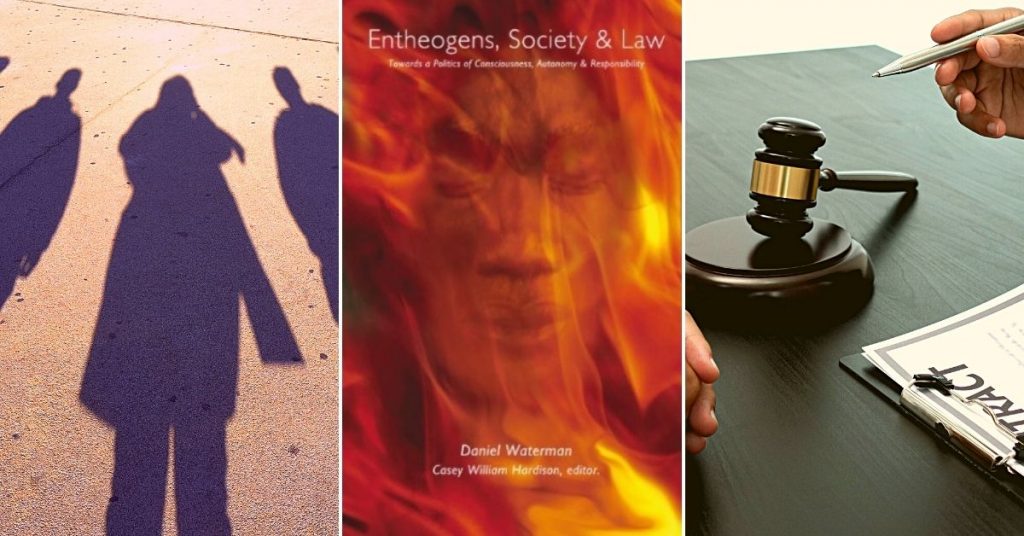
 Mystic Chemist begins at the start of the twentieth century, in the Swiss town of Basel which is evolving from a popular health spa into a major industrial city. The story concludes more than a century later, after celebrating Albert Hofmann’s 100th birthday. It tells the unique story of a soon to be famous scientist, highlighting his academic journey, his research at Sandoz and then, as the discoverer of LSD, his meetings and interactions with illustrious writers, artists and thinkers, from all over the world, whose common interest is a fascination with the new wonder-drug. Luminaries like Aldous Huxley, Timothy Leary and Richard Alpert appear on the scene and Hofmann begins a prolific correspondence with them and other interested parties. Sometimes he sends a sample, other times he hears of their “trips” on LSD or other psychedelic substances, like mescaline or psilocybin. From the beginning he takes a positive view towards efforts by physicians and psychotherapists to include LSD in new approaches to the treatment of illnesses. He sees the “psychedelic” potential of this “wonder drug” as beneficial to all. And he expresses his conviction that mystical experiences and trips to other worlds of consciousness are the best preparation for the very last journey he and every one of us well must eventually make. At the age of 102, Albert Hofmann dies at home. His vitality and open mindedness stay with him until his last breath. The life of Albert Hofmann, the Mystic Chemist, is a testimony to how one can reach a great age all the while remaining physically and mentally fit and spiritually aware. Mystic Chemist: The Life of Albert Hofmann and His Discovery of LSD tells the story of Albert Hofmann’s life and the parallel story of the wonder-drug, LSD. The book runs to 408 pages and contains over 500 color and black and white photographs, illustrations and drawings; some of them never published before. With a foreword by world renowned Czech psychiatrist Stanislav Grof, Mystic Chemist will be published in May 2013, and is available in hardcover and softcover editions.