

Acute effects of ayahuasca on neuropsychological performance: differences in executive function between experienced and occasional users.
Abstract
BACKGROUND:
Ayahuasca, a South American psychotropic plant tea containing the psychedelic 5-HT2A receptor agonist N,N-dimethyltryptamine, has been shown to increase regional cerebral blood flow in prefrontal brain regions after acute administration to humans. Despite interactions at this level, neuropsychological studies have not found cognitive deficits in abstinent long-term users.
OBJECTIVES:
Here, we wished to investigate the effects of acute ayahuasca intake on neuropsychological performance, specifically on working memory and executive function.
METHODS:
Twenty-four ayahuasca users (11 long-term experienced users and 13 occasional users) were assessed in their habitual setting using the Stroop, Sternberg, and Tower of London tasks prior to and following ayahuasca intake.
RESULTS:
Errors in the Sternberg task increased, whereas reaction times in the Stroop task decreased and accuracy was maintained for the whole sample following ayahuasca intake. Interestingly, results in the Tower of London showed significantly increased execution and resolution times and number of movements for the occasional but not the experienced users. Additionally, a correlation analysis including all subjects showed that impaired performance in the Tower of London was inversely correlated with lifetime ayahuasca use.
CONCLUSIONS:
Acute ayahuasca administration impaired working memory but decreased stimulus-response interference. Interestingly, detrimental effects on higher cognition were only observed in the less experienced group. Rather than leading to increased impairment, greater prior exposure to ayahuasca was associated with reduced incapacitation. Compensatory or neuromodulatory effects associated with long-term ayahuasca intake could underlie preserved executive function in experienced users.
Bouso, J. C., Fábregas, J. M., Antonijoan, R. M., Rodríguez-Fornells, A., & Riba, J. (2013). Acute effects of ayahuasca on neuropsychological performance: differences in executive function between experienced and occasional users. Psychopharmacology, 230(3), 415-424. http://dx.doi.org/10.1007/s00213-013-3167-9
Link to full text
 Entheogens, Society & Law takes a major step towards a comprehensive understanding of the human condition, elucidating how empathy, meaning and purpose emerge from three intersecting areas of human life: biology, consciousness and culture.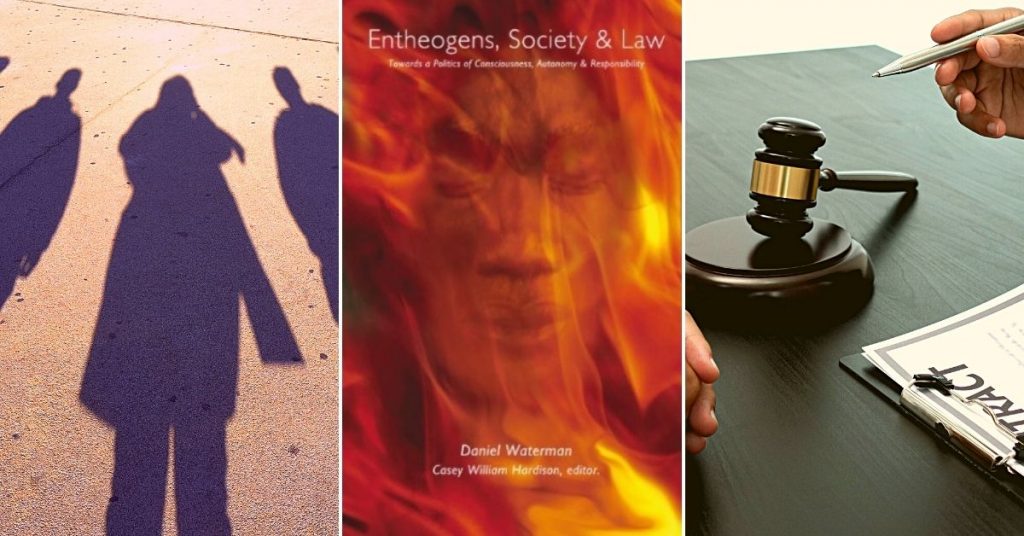
 Mystic Chemist begins at the start of the twentieth century, in the Swiss town of Basel which is evolving from a popular health spa into a major industrial city. The story concludes more than a century later, after celebrating Albert Hofmann’s 100th birthday. It tells the unique story of a soon to be famous scientist, highlighting his academic journey, his research at Sandoz and then, as the discoverer of LSD, his meetings and interactions with illustrious writers, artists and thinkers, from all over the world, whose common interest is a fascination with the new wonder-drug. Luminaries like Aldous Huxley, Timothy Leary and Richard Alpert appear on the scene and Hofmann begins a prolific correspondence with them and other interested parties. Sometimes he sends a sample, other times he hears of their “trips” on LSD or other psychedelic substances, like mescaline or psilocybin. From the beginning he takes a positive view towards efforts by physicians and psychotherapists to include LSD in new approaches to the treatment of illnesses. He sees the “psychedelic” potential of this “wonder drug” as beneficial to all. And he expresses his conviction that mystical experiences and trips to other worlds of consciousness are the best preparation for the very last journey he and every one of us well must eventually make. At the age of 102, Albert Hofmann dies at home. His vitality and open mindedness stay with him until his last breath. The life of Albert Hofmann, the Mystic Chemist, is a testimony to how one can reach a great age all the while remaining physically and mentally fit and spiritually aware. Mystic Chemist: The Life of Albert Hofmann and His Discovery of LSD tells the story of Albert Hofmann’s life and the parallel story of the wonder-drug, LSD. The book runs to 408 pages and contains over 500 color and black and white photographs, illustrations and drawings; some of them never published before. With a foreword by world renowned Czech psychiatrist Stanislav Grof, Mystic Chemist will be published in May 2013, and is available in hardcover and softcover editions.