

Experiences of Encounters with Ayahuasca – “the Vine of the Soul”
Abstract
Ayahuasca is a psychoactive brew used by the indigenous populations of the Amazon. The aim of this qualitative study was to gain insight into the experiences of western users of ayahuasca, as well as to ascertain the experienced meaning that participants felt by their participation. Twenty-five people from Northern Europe with experiences of group sessions with ayahuasca wrote anonymous descriptions of their experiences. The Empirical Phenomenological Psychological method was used for this analysis. The analysis resulted in 33 c^egories which weie assembled into six getieral themes: (a) motivation and aim, (h) contractile frightening state (c) sudden transformation of the experience, (d) limitless expansive states with transcendental experiences, (f) reflections, and (g) changed woridview and new orientation to life. These themes provided a new structure, called the transcendental circle. Participants reponed many positive psychological and physical improvements that indicate that ayahuasca could be of potential interest in the development of new medicines and therapies.
Kjellgren, A., Eriksson, A., & Norlander, T. (2009). Experiences of Encounters with Ayahuasca – ‘the Vine of the Soul. Joumal of Psychoactive Drugs, 41(4), 309-315. http://dx.doi.org/10.1080/02791072.2009.10399767
Link to full text
Experiences of Encounters with Ayahuasca – “the Vine of the Soul” Read More »
 The book describes the work of Dr. Milan Hausner at his clinic at Sadska, near Prague, where as Medical Director of the psychiatric clinic he supervised over 3,000 LSD therapeutic sessions from 1954 to 1980. As Grof says on a back cover blurb, “He has amassed information that is invaluable for the theory and practice of psychotherapy.”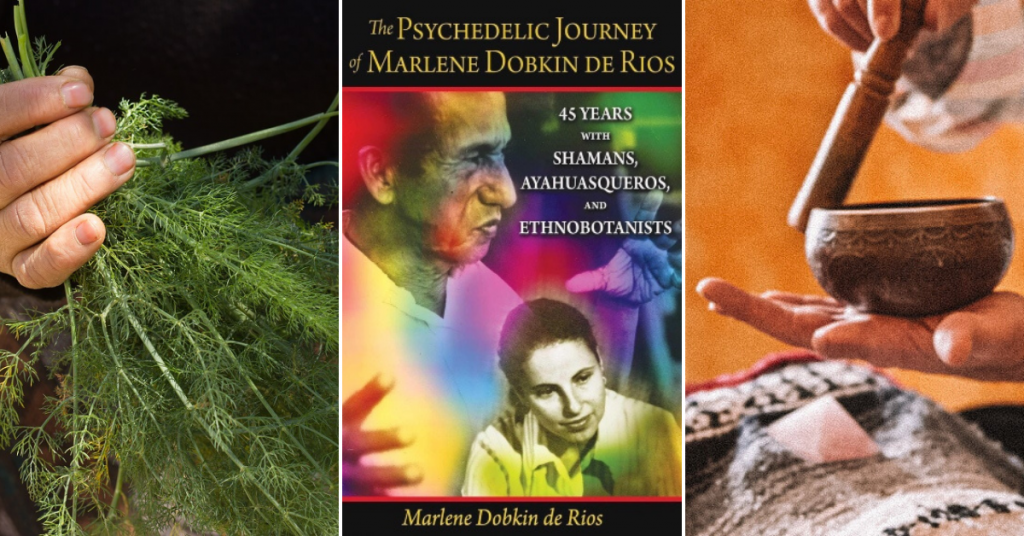
 A look inside almost half a century of pioneering research in the Amazon and Peru by a noted anthropologist studying hallucinogens, including ayahuasca – Reveals how ayahuasca successfully treats psychological and emotional disorders – Examines adolescent drug use from a cross-cultural perspective – Discusses the deleterious effects of drug tourism in the Amazon Ayahuasca is an alkaloid-rich psychoactive concoction indigenous to South America that has been employed by shamans for millennia as a spirit drug for divinatory and healing purposes. Although the late Harvard ethnobotanist Richard Evans Schultes was credited in the early 1950s as being the first to document the use of ayahuasca, other researchers, such as the distinguished anthropologist Marlene Dobkin de Rios, were responsible for furthering his findings and uncovering the curative capabilities of this amazing compound. “The Psychedelic Journey of Marlene Dobkin de Rios” presents the accumulated experience of de Rios’s 45 years of pioneering field studies in the area of hallucinogens in Peru and the Amazon. Her investigation into ayahuasca–which she undertook in collaboration with more than a dozen traditional Mestizo folk curanderos, shamans, and fellow ethnobotanists–focuses on the use of this revolutionary plant in the treatment of recalcitrant psychological and emotional disorders. She also shares some of her theories that prove that the ancient Maya used psychedelic plants as part of their religious rituals, thereby demonstrating the impact of plant psychedelics on human prehistory. In addition, Dobkin de Rios examines altered states of consciousness derived from the use of biofeedback and hypnosis and discusses her current work on the deleterious effects of drug tourism in the Amazon.
 Er is een nieuw boek verschenen over de Santo Daime van de hand van Jazmin Wuyts, afgestudeerd in culturele antropologie en ontwikkelingssociologie. Het boek, “Santo Daime; betekenis en aantrekkingskracht van een ayahuasca-religie”, is een geredigeerde versie van Wuyts’ afstudeerscriptie. De connectie tussen de Santo Daime in Brazilië en Nederland wordt onder de loep genomen, en wat het boek bijzonder maakt is dat het alleen gebaseerd is op literatuur en interviews – Wuyts heeft zelf niet deelgenomen aan de rituelen. De hoofdvraag die in het boek behandeld wordt is “Wat is de betekenis en aantrekkingskracht van de Santo Daime-religie voor de deelnemers en hoe kan men verklaren dat het in minder dan een eeuw over de hele wereld is verspreid?”