OPEN Foundation

Author name: Sogol Fereydouni

The Therapeutic Potential of Psychedelics in the Treatment of Substance Use Disorders
Substance use disorders (SUDs) remain among the most persistent global public health challenges. Despite decades of pharmacological and behavioral innovation, relapse rates remain high, and many individuals struggle to find treatments that address both the physiological and psychological drivers of addiction. Substance use is frequently intertwined with trauma, depression, anxiety, emotional dysregulation, and diminished self-awareness, factors that conventional treatments often fail to fully address.

Recent scholarship has renewed interest in psychedelics as a possible response to this gap. In a 2025 perspective article, Yuanpeng Li, Hongyuan Li, Hongshuang Wang, and Xiaohui Wang argue that psychedelics may hold particular promise for SUD treatment because they appear to act on both neurobiological and psychological processes central to addiction, including maladaptive neural circuitry, reduced cognitive flexibility, and entrenched patterns of self-related thought.

Traditional approaches to SUDs, including pharmacotherapies such as methadone and naltrexone and behavioral interventions such as cognitive-behavioral therapy, primarily focus on symptom management and harm reduction. Although these strategies demonstrate short-term effectiveness, they are frequently limited by low adherence and high relapse rates. In many cases, they do not adequately address the maladaptive cognitive patterns and rigid neural circuits that sustain addictive behaviors. Li et al. position this limitation as one reason psychedelic-assisted interventions are attracting growing attention: rather than only suppressing symptoms, they may help interrupt compulsive patterns, enhance neuroplasticity, and create conditions for deeper psychological insight and behavioral change.

In recent years, psychedelic-assisted therapy has re-emerged as a distinct therapeutic approach to addiction treatment. By targeting core neurobiological and psychological mechanisms underlying substance use disorders, psychedelic therapies may support more durable treatment outcomes than conventional interventions. As Li et al. note, early clinical findings, particularly for psilocybin-assisted therapy, suggest meaningful reductions in substance use and improvements in broader mental health outcomes across several forms of SUD, while also highlighting the need for more rigorous research, careful attention to safety, and clearer regulatory pathways.

Pharmacological Classes of Psychedelics in Addiction Treatment

Psychedelics used in therapeutic contexts can be broadly categorized based on their primary neuropharmacological mechanisms: serotonin receptor agonists, N-methyl-D-aspartate (NMDA) receptor antagonists, and multi-target compounds acting on several receptor systems. These distinctions are critical for understanding both therapeutic potential and associated risks.

Classic Psychedelics Acting on the 5-HT2A Receptor

Classic psychedelics such as psilocybin, lysergic acid diethylamide (LSD), and dimethyltryptamine (DMT) primarily act as agonists at the serotonin 5-HT2A receptor. Activation of this receptor produces profound alterations in perception, cognition, and emotional processing, while also enhancing neuroplasticity and disrupting rigid, maladaptive brain networks.

Clinical studies have shown that psilocybin- and LSD-assisted therapies can support sustained reductions in alcohol and tobacco use. Notably, one or two doses of psilocybin, when combined with structured psychotherapy, have been associated with significant decreases in heavy drinking days and long-term abstinence in nicotine dependence, with benefits persisting for up to nine to twelve months. These outcomes contrast with the relapse rates often observed in conventional SUD treatments.

Ketamine and NMDA Receptor Antagonism in Addiction Treatment

Ketamine represents a mechanistically distinct class of psychedelic-related compounds. As an NMDA receptor antagonist, ketamine modulates glutamatergic signaling, promotes rapid synaptic remodeling, and increases brain-derived neurotrophic factor (BDNF) expression. These effects may help restore reward-related neural circuits and reduce craving and withdrawal symptoms, particularly in opioid and cocaine use disorders.

However, ketamine’s clinical utility is constrained by dissociative side effects, bladder toxicity with repeated exposure, and its own potential for misuse, underscoring the need for careful clinical oversight.

Ibogaine and Other Multi-Target Psychedelic Compounds

Ibogaine, a psychoactive alkaloid derived from Tabernanthe iboga, exhibits a complex pharmacological profile, interacting with κ-opioid, NMDA, sigma, and serotonin systems. It has shown particular promise in reducing withdrawal symptoms and cravings in opioid and stimulant use disorders. However, ibogaine presents substantial safety concerns, including cardiotoxicity and neurotoxicity, which currently limit its clinical applicability.

Ayahuasca, a traditional Amazonian brew containing DMT and monoamine oxidase inhibitors, has also attracted attention for its potential role in treating substance use disorders. Beyond its pharmacological effects, the therapeutic outcomes associated with ayahuasca appear strongly influenced by the ceremonial and psychosocial contexts in which it is administered. Observational studies report reductions in alcohol use and improvements in psychological well-being, although controlled clinical trials remain limited.

Neurobiological Mechanisms of Psychedelic Therapy

At the neurobiological level, the therapeutic effects of psychedelics are closely associated with their capacity to modulate brain networks involved in self-awareness, emotional regulation, and cognitive flexibility. Activation of 5-HT2A receptors initiates intracellular signaling cascades involving phospholipase C, ERK, and mTOR pathways, ultimately promoting synaptic protein synthesis, dendritic spine growth, and structural neuroplasticity.

Psychedelics also enhance glutamatergic transmission and increase AMPA and NMDA receptor activity, resulting in elevated release of brain-derived neurotrophic factor (BDNF). BDNF–TrkB signaling reinforces synaptic stability and neural resilience, facilitating the reorganization of dysfunctional reward and emotional circuits implicated in addiction.

Neuroimaging studies consistently demonstrate that psychedelics reduce activity within the default mode network (DMN), a brain network associated with rigid self-referential thinking and rumination. Because DMN hyperactivity is commonly observed in addiction, its temporary disruption may facilitate a functional reset of maladaptive neural patterns, supporting long-term behavioral change.

Substance-Specific Mechanisms of Psychedelic Therapy

Emerging evidence suggests that psychedelics may exert substance-specific therapeutic effects by targeting neural circuits implicated in different forms of addiction.

Alcohol Use Disorder

Alcohol use disorder is associated with dysfunction in the prefrontal cortex, impairing executive control and decision-making. Psychedelic therapies may help restore cognitive flexibility and improve behavioral regulation.

Opioid Use Disorder

In opioid use disorder, alterations in the insula and amygdala contribute to craving and emotional dysregulation. Psychedelics may help reduce these symptoms by modulating emotional processing and reward pathways.

Nicotine Dependence

Nicotine addiction is strongly driven by habit formation and reward circuitry. Psychedelic experiences may disrupt entrenched behavioral patterns and enhance motivation for behavioral change.

These distinctions highlight the potential for tailoring psychedelic-assisted therapies to specific substance use disorders.

The Role of Set and Setting in Psychedelic Therapy

Set and setting are critical determinants of both the safety and efficacy of psychedelic therapy. Set refers to an individual’s mindset, expectations, and psychological state, while setting encompasses the physical, social, and therapeutic environment in which the experience occurs.

Historical and contemporary evidence indicate that well-managed set and setting enhance therapeutic outcomes, whereas poorly controlled conditions increase the likelihood of adverse experiences. The relative importance of these factors varies across compounds: ayahuasca practices often rely heavily on ritual and communal support, ibogaine administration requires intensive medical supervision, and psilocybin and LSD are typically administered within structured clinical environments that include preparation and integration sessions.

Individual differences, including genetic variability, personality traits, and mental health history, also influence responses to psychedelic substances. Comprehensive screening, psychological preparation, and post-session integration therapy are therefore essential components of responsible clinical practice.

Challenges and Limitations of Psychedelic Therapies

Despite their therapeutic promise, psychedelic therapies face significant challenges. Psychological risks include acute anxiety, panic reactions, and, in vulnerable individuals, the potential triggering of psychosis. Physiological risks vary by compound, with ibogaine presenting particular concerns due to cardiotoxicity and metabolic variability.

Legal and regulatory barriers further constrain research and clinical implementation, as many psychedelic substances remain classified as Schedule I drugs in many jurisdictions. However, regulatory reforms in several countries indicate a gradual shift toward expanded research access and carefully regulated therapeutic use.

Future research should prioritize large-scale controlled trials, biomarker development, and personalized treatment approaches to improve both safety and efficacy.

Current Understanding and Future Directions

Psychedelic-assisted therapies represent a novel and potentially transformative approach to treating substance use disorders. By addressing the neural and psychological foundations of addiction rather than solely its symptoms, psychedelic therapies may complement existing treatments and support more durable recovery outcomes. Although substantial challenges remain, the growing body of evidence supports cautious optimism regarding their future integration into addiction treatment frameworks.

References

AUTHOR

Sogol Fereydouni

MSc Student in Neuroscience, background in Cell and Molecular Biology

Sogol is a graduate student with a growing passion for understanding the biological mechanisms that underlie brain function and human behavior.

Her academic journey began in Tehran, where she earned a Bachelor’s degree from the Islamic Azad University of Pharmaceutical Sciences (IAUPS). Wanting to deepen her knowledge of human biology, she pursued a Master’s in Medical Biology at the University of Salzburg (Paris Lodron University) in Austria.

However, before completing that program, her curiosity about the brain led her to Greece, where she continued her studies with a Master’s in Neuroscience at the National and Kapodistrian University of Athens (NKUA).    

Alongside her academic work, Sogol conducts research on psychedelics, examining how these compounds influence neurobiology, resilience, emotional processing, and human behavior. As a mental well-being and life coach, she supports her clients in cultivating clarity, emotional balance, and meaningful personal growth, integrating scientific insight with a human-centered approach.

The Therapeutic Potential of Psychedelics in the Treatment of Substance Use Disorders Read More »

DMT and the Brain: A New Doorway Into Brain Renewal

In the past years, psychedelic science has focused heavily on how substances like psilocybin, LSD, and ayahuasca affect mood, perception, and mental health. But a new line of research is beginning to uncover something even more fundamental: their potential to affect the brain’s capacity to generate new neurons. A 2020 study by the Spanish National Research Council found that N,N-dimethyltryptamine (DMT), a key component of ayahuasca, may directly stimulate adult neurogenesis in the hippocampus, a brain region essential for learning and memory.

Inside the DMT Neurogenesis Experiment

The researchers examined whether DMT can activate the brain’s subgranular zone (SGZ), one of the few areas where new neurons are generated in adults.

They used both in vitro models (neural stem cells from the mouse hippocampus grown into neurospheres) and in vivo mouse experiments to see if DMT influences the proliferation, migration, and differentiation of neural stem cells.

DMT is found in many plants used in traditional Amazonian medicine and in mammals, including the lungs and brain. In the body, it acts as a natural neurotransmitter involved in processes such as nerve signaling and the immune response. Earlier studies showed that DMT interacts with serotonin receptors (especially 5-HT1A and 5-HT2A), but it also attaches to the sigma-1 receptor, a protein mainly found in the endoplasmic reticulum. The sigma-1 receptor is involved in cell development, handling stress, mitochondrial function, protecting nerve cells, and, more recently, has been linked to the growth of new neurons.

DMT Neurogenesis

In adults, new neurons mostly form in two brain areas: the subventricular zone and the subgranular zone (SGZ) of the dentate gyrus, a region of the hippocampus. As we age, this process slows, but the formation of new neurons still supports learning, memory, and emotional balance. It is also reduced in diseases like Alzheimer’s and Parkinson’s. Earlier research showed that some parts of ayahuasca, like β-carbolines such as harmine, can boost neurogenesis. This led scientists to ask: Does DMT itself directly affect the growth of new neurons, and if so, how?

Isolating Neural Stem Cells

Researchers took neural stem cells from the SGZ of adult mice. When grown with certain growth factors, these cells formed round clusters called neurospheres. After a week, the neurospheres were treated with DMT alone or with blockers of sigma-1 or serotonin receptors. This helped the scientists figure out which receptor was responsible for DMT’s effects.

Parallel experiments were conducted in adult mice that received intraperitoneal injections of DMT for either:

  • Four consecutive days (short-term experiments), or
  • Twenty-one days (long-term experiments)

The animals were given BrdU, which marks new cells, so researchers could track how many new cells were made, how they moved, and what types they became in the hippocampus. In mice treated for a longer period, scientists also ran behavioral tests, such as the Morris water maze and novel object recognition, to determine whether DMT-induced neurogenesis affected learning and memory.

DMT Regulates Multiple Stages of Adult Neurogenesis

  1. DMT Reduces “Stemness” and Promotes Exit from the Undifferentiated State

The first sign that DMT affects neurogenesis came from examining stemness markers, proteins found in undifferentiated neural stem cells. After 7 days of DMT treatment, the neurospheres had lower levels of Musashi-1, Nestin, and SOX-2, indicating that the cells were beginning to differentiate into other cell types. This effect was stopped by blocking the sigma-1 receptor, but not by blocking serotonin receptors, suggesting that the sigma-1 receptor is key.

  1. DMT Increases Proliferation of Neural Stem Cells

When researchers examined the neurospheres, they found that DMT increased both the number and the size of these clusters compared to controls. There were also higher levels of markers of cell division, such as Ki67 and PCNA, confirming that DMT boosts cell growth. Blocking the sigma-1 receptor stopped this effect.

  1. DMT Promotes Differentiation into Neurons, Astrocytes, and Oligodendrocytes

One of the most notable results was that DMT not only increased cell growth, but also guided stem cells to become different types of brain cells:

  • Neuronal differentiation increased, as measured by β-III-tubulin and MAP-2 expression.
  • Astrocytic differentiation increased, as seen through elevated GFAP.
  • Oligodendrocyte formation rose, indicated by increased CNPase expression.

All these effects depended on activating the sigma-1 receptor. Unlike other parts of ayahuasca, such as harmine, DMT had a broader and stronger impact on different types of brain cells.

DMT Activates the Hippocampal Neurogenic Niche

Short-Term Effects: Proliferation and Migration

After just four days of treatment, mice given DMT had more BrdU+/Nestin+ cells in the SGZ, which are dividing stem cells, and more BrdU+/DCX+ neuroblasts, which are young neurons on the move. These cells also had more complex branches. Blocking the sigma-1 receptor stopped these effects, but blocking serotonin receptors did not, showing that the sigma-1 receptor is the main pathway for DMT’s effects on new brain cells.

Long-Term Effects: Generation of Mature Neurons

When mice were given DMT for three weeks, the increase in new brain cells continued until the cells were fully mature. Researchers saw more developing neurons moving through the hippocampus and more mature neurons in the dentate gyrus. In short, DMT not only initiated the formation of new brain cells but also helped them mature.

DMT Enhances Learning and Memory in Mice

To determine whether the cellular changes had functional consequences, the authors assessed cognition using two behavioral tasks.

  • Morris Water Maze: Mice treated with DMT learned faster during training sessions, taking less time to find the platform, and remembered the platform’s location better during later tests.
  • Novel Object Recognition: Mice that received DMT spent more time exploring new objects, approached them more often, and started exploring sooner.

These improvements occurred without changes in motivation or motor abilities, showing that the improved memory was truly linked to new brain cell growth.

Sigma-1 Receptor Activation: The Key to DMT’s Neurogenic Power

This research shows that DMT strongly affects adult neurogenesis, helping at every stage from cell growth to movement to full development. The sigma-1 receptor is the main player and a promising target for new treatments because, unlike 5-HT2A activation, it does not cause hallucinations. This means it may be possible to create therapies that use DMT’s brain-boosting effects without the psychedelic experience.

In addition, more new brain cells are linked to antidepressant effects, which could help explain why ayahuasca shows promise for treating depression in clinical studies. The researchers also point out that DMT’s ability to boost not only neurons but also astrocytes and oligodendrocytes could be important for brain repair after injury and in diseases that damage the nervous system.

The study by Morales-García and colleagues offers strong evidence that DMT, known for its psychedelic effects, also has major biological impacts on the growth of new brain cells in adults. By activating the sigma-1 receptor, DMT promotes the growth, development, and maturation of neural cells in the hippocampus, leading to better learning and memory in mice. These results could help us better understand how psychedelics affect brain flexibility and may lead to new treatments for mood and brain diseases.

AUTHOR

Sogol Fereydouni

MSc Student in Neuroscience, background in Cell and Molecular Biology

Sogol is a graduate student with a growing passion for understanding the biological mechanisms that underlie brain function and human behavior.

Her academic journey began in Tehran, where she earned a Bachelor’s degree from the Islamic Azad University of Pharmaceutical Sciences (IAUPS). Wanting to deepen her knowledge of human biology, she pursued a Master’s in Medical Biology at the University of Salzburg (Paris Lodron University) in Austria.

However, before completing that program, her curiosity about the brain led her to Greece, where she continued her studies with a Master’s in Neuroscience at the National and Kapodistrian University of Athens (NKUA).    

Alongside her academic work, Sogol conducts research on psychedelics, examining how these compounds influence neurobiology, resilience, emotional processing, and human behavior. As a mental well-being and life coach, she supports her clients in cultivating clarity, emotional balance, and meaningful personal growth, integrating scientific insight with a human-centered approach.

DMT and the Brain: A New Doorway Into Brain Renewal Read More »

Psilocybin and Aging: Early Evidence from Human Cells and Mice

Psilocybin, the psychoactive compound in magic mushrooms, has been studied for its effects on depression, anxiety, addiction, and end-of-life distress for decades. Now, a new preclinical study from Emory University and Baylor College of Medicine, published in npj Aging, suggests that psilocybin may also influence biological aging, at least in cells and mice.

In this work, researchers showed that psilocin, the active metabolite of psilocybin, extended the lifespan of human cells in culture by more than 50%. They also found that aged mice given psilocybin lived longer than untreated mice and appeared physically healthier, as determined by basic visual inspection.

Why Scientists Looked at Psilocybin and Aging

Psilocybin is already the subject of more than 150 completed or ongoing clinical studies for psychiatric, neurodegenerative, pain, and other conditions.

One proposed explanation for its broad impact is the psilocybin–telomere hypothesis, which sits at the intersection of mental health and biological aging. This hypothesis is based on several observations:

  • Clinical depression, chronic stress, and anxiety have been associated with shorter telomeres, the protective caps at the ends of chromosomes that tend to shorten with age.
  • More positive psychological states have been linked to longer telomeres or slower telomere shortening.
  • Human studies have shown that single high-dose psilocybin sessions can produce long-lasting improvements in mental health symptoms, with some benefits reported to persist for years.

These findings led researchers to ask a straightforward but previously untested question: Does psilocybin (or its active metabolite, psilocin) directly influence cellular aging processes, rather than acting only indirectly through psychological changes?

Psilocin Made Human Cells Live Longer

To test this, the team used two types of human cells that are widely employed in aging research: human fetal lung fibroblasts (IMR-90) and adult human skin fibroblasts. In both cases, cells were grown in the lab and repeatedly passed, meaning they were allowed to divide until they reached replicative senescence, a state in which they permanently stop dividing. Psilocin was added continuously to the culture medium at different concentrations.

In lung fibroblasts, psilocin produced an apparent, dose-dependent effect on cellular lifespan: 

  • At 10 µM psilocin, cellular lifespan increased by about 29% compared to control cells.
  • At 100 µM psilocin, lifespan increased by about 57%.

Psilocin-treated cells entered senescence later than control cells, showed lower activity of senescence-associated β-galactosidase, and had reduced levels of the cell-cycle arrest proteins p16 and p21. 

At the same time, markers of cell proliferation and DNA replication (such as PCNA and phosphorylated Rb) were increased. The cells also exhibited higher levels of SIRT1, a protein involved in regulating cellular aging and stress responses, and lower levels of GADD45a, consistent with reduced DNA damage signaling. Measures of oxidative stress were also reduced, along with changes in key regulators, including a decrease in Nox4 and an increase in Nrf2.

Importantly, psilocin-treated cells ultimately reached senescence and showed no evidence of uncontrolled, cancer-like growth under the tested conditions.

When the experiment was repeated in adult human skin fibroblasts with 100 µM psilocin, the results were similar. Cellular lifespan increased by approximately 51%, and markers of senescence decreased, accompanied by reductions in oxidative stress.

Taken together, the in-vitro data indicate that psilocin can delay cellular senescence, extend the proliferative lifespan of human fibroblasts, reduce oxidative stress, and help maintain telomere length under these laboratory conditions.

Psilocybin Helped Aged Mice Live Longer

The second part of the study moved from cell culture to an animal model. Here, the researchers asked whether psilocybin could influence survival in aged mice.

Female C57BL/6J mice, 19 months old at the start of the study (roughly equivalent to 60–65-year-old humans), were randomly assigned to receive either psilocybin or a control solution by mouth. In the first month, the psilocybin group received a 5 mg/kg dose to acclimate the animals. For the following nine months, they received 15 mg/kg once per month. Control mice received the same volume of saline without psilocybin. All mice were monitored for 10 months after the first dose, and the study ended when one group reached 50% mortality.

At the end of the study period, 80% of psilocybin-treated mice (24 out of 30) were still alive, compared with 50% of control mice (14 out of 28). This difference in survival was statistically significant.

Beyond survival, the researchers observed differences in physical appearance. 

Psilocybin-treated mice appeared to have better fur quality, more hair growth, and fewer white hairs. These observations were based on photographs and visual inspection and were not quantified with specific scoring systems.

How Might Psilocybin Influence Aging Pathways?

Psilocybin is converted in the body to psilocin, which interacts with serotonin receptors, especially the 5-HT2A receptor. These receptors are expressed not only in the brain but also in many other tissues, including fibroblasts, heart muscle cells, endothelial cells, epithelial cells, and immune cells.

The authors highlight several mechanisms that may help explain the findings:

  • SIRT1 activation and antioxidant defenses
    • Previous work in neurons has shown that stimulating 5-HT2A receptors can increase SIRT1-dependent expression of antioxidant enzymes, reducing oxidative stress and providing neuroprotection.
    • In the current study, psilocin increased SIRT1 levels in fibroblasts and reduced markers of oxidative stress, suggesting that similar pathways might be involved in non-neuronal cells.
  • Oxidative stress and DNA-damage responses
    • Psilocin treatment reduced reactive oxygen species (ROS) and lowered levels of Nox4, a key regulator of oxidant production.
    • It also altered DNA-damage response proteins such as GADD45a in a manner consistent with reduced DNA stress.
  • Telomere preservation and delayed senescence
    • By helping preserve telomere length and delaying the onset of replicative senescence in fibroblasts, psilocin appears to influence several recognized “hallmarks of aging,” including telomere attrition, cellular senescence, and altered intercellular communication via oxidative stress pathways.

Psilocybin may reduce oxidative stress, improve DNA repair responses, and preserve telomere length, processes that are closely tied to aging and age-related diseases such as cancer, neurodegeneration, and cardiovascular disease.

What This Early Study Shows

While these early-stage, preclinical findings are notable, they come with important caveats. The cellular experiments were done in cultured fibroblasts under controlled laboratory conditions, and the animal data are from a single long-term study in aged female mice, using a single dosing regimen and a single strain of mice.

As a result:

  • It is not known whether similar lifespan or cellular effects would occur in humans.
  • The optimal dose, frequency, and timing of psilocybin treatment for any potential aging-related benefits are unknown.
  • The study used only female mice; possible sex-specific effects remain to be explored in future work.
  • Although psilocin-treated cells ultimately senesced and did not show signs of transformation in vitro, the authors note that delaying senescence and extending proliferative potential could have complex implications for cancer risk, which must be carefully studied in future in vivo work.

The regulatory context is also important. Psilocybin remains a Schedule I substance under U.S. federal law, and the authors point out that this classification, along with limited federal funding, continues to slow research on its long-term systemic effects.

A New Angle on an Old Molecule

Taken together, the study by Kato and colleagues provides the first direct experimental evidence that psilocin and psilocybin can affect several hallmarks of aging in human cells and in a mouse model, including telomere maintenance, oxidative stress, and cellular senescence, as well as survival in aged animals.

These results do not show that psilocybin is an anti-aging therapy for humans, nor do they justify self-medication. Instead, they open a new line of inquiry regarding how a compound best known for its psychological effects might also interact with fundamental aging pathways throughout the body.

Future studies, particularly in humans, are needed to determine whether these preclinical findings translate into meaningful changes in healthy aging, disease risk, or quality of life later in life. For now, the work offers a carefully measured but genuinely new perspective on psilocybin: not only as a potential tool in mental health care, but also as a molecule that may warrant further investigation in the biology of aging.

AUTHOR

Sogol Fereydouni

MSc Student in Neuroscience, background in Cell and Molecular Biology

Sogol is a graduate student with a growing passion for understanding the biological mechanisms that underlie brain function and human behavior.

Her academic journey began in Tehran, where she earned a Bachelor’s degree from the Islamic Azad University of Pharmaceutical Sciences (IAUPS). Wanting to deepen her knowledge of human biology, she pursued a Master’s in Medical Biology at the University of Salzburg (Paris Lodron University) in Austria.

However, before completing that program, her curiosity about the brain led her to Greece, where she continued her studies with a Master’s in Neuroscience at the National and Kapodistrian University of Athens (NKUA).    

Alongside her academic work, Sogol conducts research on psychedelics, examining how these compounds influence neurobiology, resilience, emotional processing, and human behavior. As a mental well-being and life coach, she supports her clients in cultivating clarity, emotional balance, and meaningful personal growth, integrating scientific insight with a human-centered approach.

Psilocybin and Aging: Early Evidence from Human Cells and Mice Read More »

Psilocybin and Neuroplasticity: A Review of Preclinical and Clinical Studies

Introduction

Psilocybin, a naturally occurring psychedelic compound, has garnered attention for its potential to induce neuroplasticity and treat mental health disorders such as depression, anxiety, and PTSD (Zhang et al., 2024). Through its action on the serotonin 5-HT2A receptor, psilocybin appears to facilitate structural changes in the brain, which may underlie its therapeutic effects (Ly et al., 2023). This review explores the neuroplastic effects of psilocybin, focusing on findings from preclinical animal studies and clinical trials, and considers the implications for its use in treating psychiatric conditions.

Mechanism of Action

Psilocybin exerts its effects primarily through activation of the 5-HT2A serotonin receptor, which is densely expressed in the neocortex. This receptor activation initiates a cascade of intracellular signaling pathways, including the BDNF (brain-derived neurotrophic factor) and mTOR (mammalian target of rapamycin) pathways, which are vital for neurogenesis and synaptic plasticity (Ly et al., 2023). Additionally, psilocybin has been shown to increase dendritic spine density and complexity, which enhances synaptic connections and promotes neuroplasticity (Shao et al., 2021). These structural changes may contribute to the therapeutic benefits of psilocybin, particularly in mood regulation and cognitive flexibility.

Psilocybin and Neurogenesis

Psilocybin influences neurogenesis—the formation of new neurons—in a dose-dependent manner, with low doses enhancing and high doses inhibiting neuronal growth (De Vos et al., 2021). Repeated psychedelic use has been shown to stimulate neurogenesis and elevate BDNF and mRNA levels (De Vos et al., 2021; Glavonic et al., 2022). It modulates neurogenesis particularly in the hippocampus, which is vital for memory and learning, while also inducing gene expression linked to neuroplasticity, especially in the prefrontal cortex (Jefsen et al., 2021). These effects suggest a broader impact on brain plasticity and cognitive function, highlighting the potential of psychedelics in treating neuropsychiatric disorders like PTSD, anxiety, and depression (da Cruz et al., 2023; Marchoir et al., 2024). BDNF, increased by psilocybin, plays a key role in supporting neurogenesis (Weiss et al., 2025)

Psilocybin and spinogenesis and dendritogenesis

Psilocybin has been shown to rapidly and persistently increase dendritic spine growth, resulting in elevated spine size and density through enhanced spine formation (Shao et al., 2021). A single dose can induce approximately a 10% increase in spine metrics and also ameliorate stress-related behavioral deficits while enhancing excitatory neurotransmission (Shao et al., 2021). It activates synaptic rewiring and promotes neuroplastic changes in the cortex (Shao et al., 2021). Psilocybin enhances plasticity by directly binding to BDNF receptors, leading to robust spinogenesis and dendritogenesis (Moliner et al., 2023). It also increases dendritic arbor complexity and spine growth, supporting its role in structural and functional neuroplasticity (Ly et al., 2018). In vitro studies confirm that a single dose can induce dendritogenesis and spinogenesis in cultured neurons (Shao et al., 2021). Psilocybin’s therapeutic and lasting effects are thought to stem from its ability to promote plasticity in the prefrontal cortex, particularly by stimulating pyramidal neuron growth and restoring synaptic connectivity (Olson, 2022)

Psilocybin and Neuroplasticity

While some studies have found no significant link between psilocybin and neuroplasticity (Heuschkel & Kuypers, 2020), others demonstrate its substantial impact on mood and social behavior through neuroplastic mechanisms (Heuschkel & Kuypers, 2020). Psilocybin has been shown to promote fear extinction and enhance neuroplasticity, as evidenced by reduced freezing behavior in mice—suggesting its potential for treating fear-based disorders such as PTSD (Du et al., 2023). In mice, a single dose has produced rapid and lasting antidepressant-like effects associated with enhanced neuroplasticity (Zhao et al., 2024). In humans, increased EEG theta power following psilocybin administration has been correlated with symptom improvements in depression, indicating long-term neural changes (Skosnik et al., 2023). Animal studies also highlight psilocybin’s pro-social and antidepressant effects, varying by strain and suggesting insight into treatment-resistant depression (Kolasa et al., 2024). Emerging research explores combining psilocybin with NMDA receptor modulators to enhance synaptogenesis and therapeutic outcomes (Ben Tal et al., 2024). Psilocybin has also shown promise in treating OCD by inducing neuroplastic adaptations, both in mouse models and clinical populations (Lazar et al., 2024; O’Connor et al., 2025). Collectively, these findings suggest that psilocybin fosters neuroplasticity and sustained antidepressant effects, offering new directions for mental health treatment, though further research is needed to fully clarify its mechanisms.

In Vitro

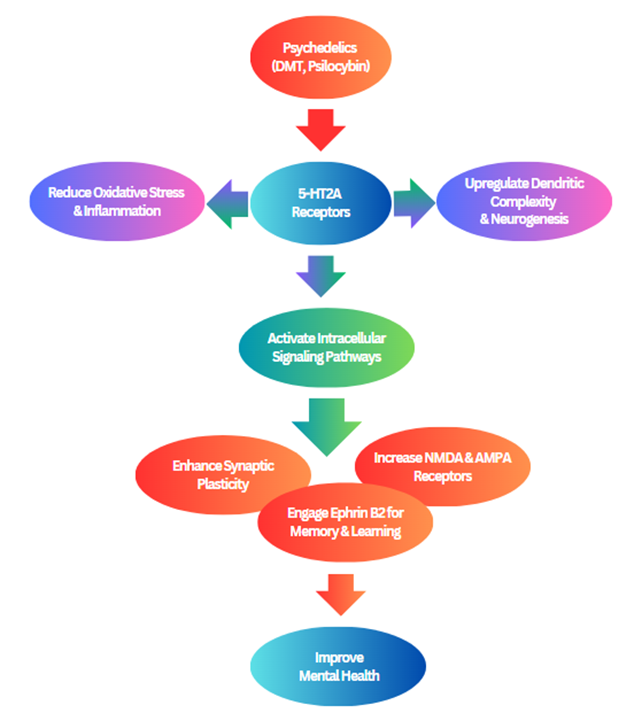
Recent in vitro studies highlight the neuroplasticity-promoting properties of psychedelics, particularly DMT and psilocybin. These compounds have been shown to enhance dendritic complexity, neurogenesis, and activate signaling pathways linked to synaptic plasticity (De Vos et al., 2021). Notably, psychedelics also exhibit anti-inflammatory and antioxidant effects, suggesting broader neuroprotective potential beyond synaptic remodeling (Kozlowska et al., 2022). A key mechanism involves 5-HT2A receptor activation, as increased dendritic branching in rat cortical neurons was blocked by ketanserin, a 5-HT2A antagonist (Cameron et al., 2023). In human cerebral organoids, DMT increased NMDA and AMPA receptor expression and Ephrin B2, engaging key synaptic pathways for learning and memory (Dakic et al., 2024). However, a limitation of in vitro studies is the lack of data on subacute and long-term effects of psychedelics on plasticity (Lima da Cruz et al., 2024). While findings support psychedelics’ potential in modifying disease pathology, their role in treating neurodegenerative disorders remains speculative without robust preclinical models (Kozlowska et al., 2022). Overall, these studies underscore the serotonergic modulation of neuroplasticity and the therapeutic promise of psychedelics (Figure 3)

Figure 3. A schematic diagram illustrating how psychedelics like DMT and psilocybin enhance neuroplasticity through 5-HT2A receptor activation, dendritic growth, synaptic plasticity, neurogenesis, and reduced inflammation, supporting their therapeutic potential in mental and neurodegenerative disorders.

In Vivo Studies

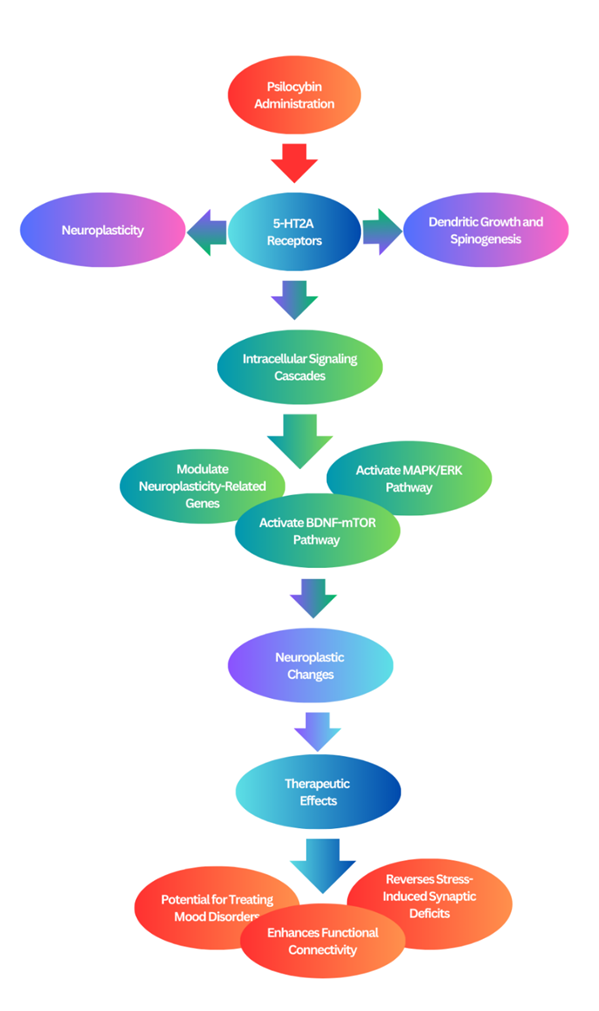
Animal studies provide compelling evidence for psilocybin’s role in promoting neuroplasticity in vivo. Psilocybin induces rapid and sustained growth of dendritic spines in the frontal cortex, primarily through activation of serotonin 5-HT2A receptors (Zhou et al., 2025; Shao et al., 2021). This activation engages the BDNF-TrkB and mTOR signaling pathways, increasing synaptic proteins such as p-GluA1, PSD95, and synapsin-1, all critical for synaptic plasticity (Moliner et al., 2023). Furthermore, psilocybin-induced desynchronization of brain networks may facilitate large-scale neural circuit reorganization, aiding its therapeutic effects (Acero et al., 2023).

Additional evidence shows that psilocybin modifies expression of neuroplasticity-related genes such as Arc and c-Fos in the hippocampus and prefrontal cortex via the BDNF/TrkB and MAPK/ERK pathways (Shao et al., 2021; Nichols, 2020). A single oral dose can increase dendritic spine density and size in the medial PFC and hippocampus, with effects lasting weeks. This is accompanied by increased neurogenesis (doublecortin-positive cells) and elevated synaptic protein levels, suggesting reversal of stress-induced deficits and enhancement of hippocampal-cortical connectivity (Weiss et al., 2025; Winkelman et al., 2023).

While 5-HT2A and BDNF-mTOR pathways are central to these effects, findings also reveal region-specific and behavior-dependent responses. For instance, psilocybin may alleviate depression via PFC-driven mood regulation, and PTSD via hippocampal-mediated fear extinction (Grieco et al., 2022; Askey et al., 2024). Future research should clarify the long-term stability of these changes and individual variability in response to optimize clinical applications (Lowe et al., 2021).

Figure 4. A visual representation of the mechanisms by which psilocybin and other psychedelics promote neuroplasticity.

Preclinical Studies

Preclinical research consistently supports the notion that psilocybin and related psychedelics enhance neuroplasticity at molecular and cellular levels, particularly in the prefrontal cortex and hippocampus—regions critical for emotion regulation, cognition, and memory (Weiss et al., 2025; Gattuso et al., 2024). A systematic review reported that 15 of 16 studies demonstrated psychedelic-induced neuroplasticity, suggesting these changes may underpin their therapeutic potential (Miller, 2024).

Recent findings provide direct evidence of psilocybin’s role in restoring dendritic complexity, spine density, and promoting neurogenesis, notably through the upregulation of plasticity-related proteins like BDNF and mTOR (Aquino Vasquez, 2024; Zhao et al., 2024). Additionally, psilocybin reversed stress-induced reductions in DCX- and BrdU-positive cells in the dentate gyrus, highlighting its potential to counteract neuronal atrophy (Rosas-Sánchez et al., 2024).

Further research emphasizes the temporal dynamics and regional specificity of psychedelic-induced plasticity. Studies show that 5-HT2A receptor activation initiates a plasticity window within hours, lasting days to weeks (Agnorelli et al., 2024). Importantly, these effects appear experience-dependent, meaning the subjective psychological experience during the neuroplastic window may shape long-term outcomes. This aligns with clinical reports that a single psychedelic session can lead to enduring therapeutic benefits—emphasizing the analyze its safety with long-term use.

Clinical Studies

Clinical research increasingly supports psilocybin’s therapeutic potential in treating stress-related psychiatric disorders, particularly depression and anxiety (Metaxa & Clarke, 2024; Gattuso et al., 2024). Psilocybin, under controlled and supportive conditions, has demonstrated the ability to reduce depressive and anxiolytic symptoms across various studies (Tullis, 2021; Winkelman, 2024; Meyer et al., 2022). These effects are thought to arise, at least in part, through psilocybin’s capacity to enhance neuroplasticity (Kolasa et al., 2024).

The rapid onset of clinical benefits observed with psilocybin contrasts with the delayed effects of traditional antidepressants, suggesting that psychedelics may promote faster therapeutic responses via neuroplastic mechanisms (Sessa, 2016). Following conversion to its active metabolite psilocin, psilocybin primarily acts through the serotonin 5-HT2A receptor, especially in the prefrontal cortex. Activation of this receptor triggers intracellular pathways—including BDNF and mTOR signaling—known to facilitate synaptic plasticity and dendritic remodeling.

Functional MRI studies further reveal that psilocybin enhances connectivity between large-scale brain networks, such as the default mode network and salience network, while downregulating hyperactive regions associated with rumination and self-referential processing. These effects promote a reorganization of neural circuits, increasing cognitive flexibility and allowing patients to break free from rigid, negative thought patterns.

Additionally, psilocybin increases levels of synaptic proteins such as PSD-95 and synapsin-1, reinforcing synaptic strength and function. These neuroplastic adaptations have been strongly correlated with both rapid and sustained symptom improvements observed in clinical trials.

Conclusion

Psilocybin-induced neuroplasticity presents a promising avenue for the treatment of mental health disorders, offering rapid and sustained therapeutic effects through its modulation of brain plasticity. Supporting studies highlight psilocybin’s ability to enhance synaptic connectivity, dendritogenesis, and neurogenesis, particularly through 5-HT2A receptor activation and BDNF-TrkB signaling, which are crucial for improving mood regulation and cognitive flexibility. Additionally, clinical and preclinical research suggests psilocybin may play a key role in fear extinction and social behavior improvements, reinforcing its potential as a novel intervention for disorders such as depression, PTSD, and OCD. However, contrasting findings suggest inconsistencies in psilocybin’s neuroplastic effects, with some studies reporting a lack of significant changes in synaptic density or function, emphasizing the need for standardized protocols and further exploration of dosage-dependent outcomes. These disparities highlight the necessity for rigorous investigations into the long-term effects, precise mechanisms, and individual variability in response to psilocybin treatment. Future research should focus on elucidating the cellular and molecular pathways involved, optimizing therapeutic protocols, and addressing safety concerns to maximize psilocybin’s potential as a clinically viable treatment for neuropsychiatric disorders.

Future research should include not only the impact of microdosed psilocybin on neuropsychiatric conditions, but also its effect on autoimmune diseases and other chronic illnesses associated with inflammation.

Psilocybin and Neuroplasticity: A Review of Preclinical and Clinical Studies Read More »

Healing culture and its somewhat humorous discontents - July 22