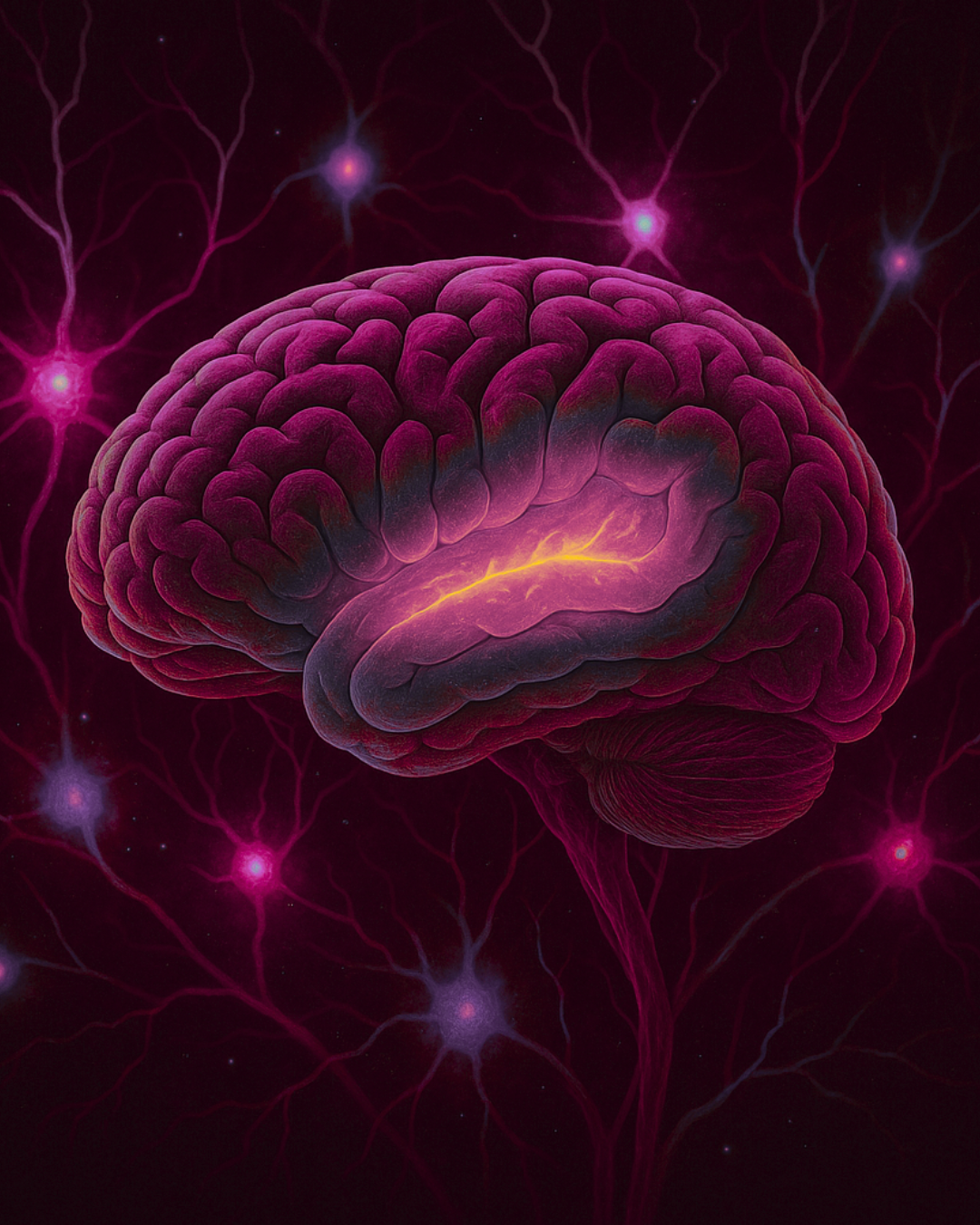
In the past years, psychedelic science has focused heavily on how substances like psilocybin, LSD, and ayahuasca affect mood, perception, and mental health. But a new line of research is beginning to uncover something even more fundamental: their potential to affect the brain’s capacity to generate new neurons. A 2020 study by the Spanish National Research Council found that N,N-dimethyltryptamine (DMT), a key component of ayahuasca, may directly stimulate adult neurogenesis in the hippocampus, a brain region essential for learning and memory.
Inside the DMT Neurogenesis Experiment
The researchers examined whether DMT can activate the brain’s subgranular zone (SGZ), one of the few areas where new neurons are generated in adults.
They used both in vitro models (neural stem cells from the mouse hippocampus grown into neurospheres) and in vivo mouse experiments to see if DMT influences the proliferation, migration, and differentiation of neural stem cells.
DMT is found in many plants used in traditional Amazonian medicine and in mammals, including the lungs and brain. In the body, it acts as a natural neurotransmitter involved in processes such as nerve signaling and the immune response. Earlier studies showed that DMT interacts with serotonin receptors (especially 5-HT1A and 5-HT2A), but it also attaches to the sigma-1 receptor, a protein mainly found in the endoplasmic reticulum. The sigma-1 receptor is involved in cell development, handling stress, mitochondrial function, protecting nerve cells, and, more recently, has been linked to the growth of new neurons.
DMT Neurogenesis
In adults, new neurons mostly form in two brain areas: the subventricular zone and the subgranular zone (SGZ) of the dentate gyrus, a region of the hippocampus. As we age, this process slows, but the formation of new neurons still supports learning, memory, and emotional balance. It is also reduced in diseases like Alzheimer’s and Parkinson’s. Earlier research showed that some parts of ayahuasca, like β-carbolines such as harmine, can boost neurogenesis. This led scientists to ask: Does DMT itself directly affect the growth of new neurons, and if so, how?
Isolating Neural Stem Cells
Researchers took neural stem cells from the SGZ of adult mice. When grown with certain growth factors, these cells formed round clusters called neurospheres. After a week, the neurospheres were treated with DMT alone or with blockers of sigma-1 or serotonin receptors. This helped the scientists figure out which receptor was responsible for DMT’s effects.
Parallel experiments were conducted in adult mice that received intraperitoneal injections of DMT for either:
- Four consecutive days (short-term experiments), or
- Twenty-one days (long-term experiments)
The animals were given BrdU, which marks new cells, so researchers could track how many new cells were made, how they moved, and what types they became in the hippocampus. In mice treated for a longer period, scientists also ran behavioral tests, such as the Morris water maze and novel object recognition, to determine whether DMT-induced neurogenesis affected learning and memory.
DMT Regulates Multiple Stages of Adult Neurogenesis
- DMT Reduces “Stemness” and Promotes Exit from the Undifferentiated State
The first sign that DMT affects neurogenesis came from examining stemness markers, proteins found in undifferentiated neural stem cells. After 7 days of DMT treatment, the neurospheres had lower levels of Musashi-1, Nestin, and SOX-2, indicating that the cells were beginning to differentiate into other cell types. This effect was stopped by blocking the sigma-1 receptor, but not by blocking serotonin receptors, suggesting that the sigma-1 receptor is key.
- DMT Increases Proliferation of Neural Stem Cells
When researchers examined the neurospheres, they found that DMT increased both the number and the size of these clusters compared to controls. There were also higher levels of markers of cell division, such as Ki67 and PCNA, confirming that DMT boosts cell growth. Blocking the sigma-1 receptor stopped this effect.
- DMT Promotes Differentiation into Neurons, Astrocytes, and Oligodendrocytes
One of the most notable results was that DMT not only increased cell growth, but also guided stem cells to become different types of brain cells:
- Neuronal differentiation increased, as measured by β-III-tubulin and MAP-2 expression.
- Astrocytic differentiation increased, as seen through elevated GFAP.
- Oligodendrocyte formation rose, indicated by increased CNPase expression.
All these effects depended on activating the sigma-1 receptor. Unlike other parts of ayahuasca, such as harmine, DMT had a broader and stronger impact on different types of brain cells.
DMT Activates the Hippocampal Neurogenic Niche
Short-Term Effects: Proliferation and Migration
After just four days of treatment, mice given DMT had more BrdU+/Nestin+ cells in the SGZ, which are dividing stem cells, and more BrdU+/DCX+ neuroblasts, which are young neurons on the move. These cells also had more complex branches. Blocking the sigma-1 receptor stopped these effects, but blocking serotonin receptors did not, showing that the sigma-1 receptor is the main pathway for DMT’s effects on new brain cells.
Long-Term Effects: Generation of Mature Neurons
When mice were given DMT for three weeks, the increase in new brain cells continued until the cells were fully mature. Researchers saw more developing neurons moving through the hippocampus and more mature neurons in the dentate gyrus. In short, DMT not only initiated the formation of new brain cells but also helped them mature.
DMT Enhances Learning and Memory in Mice
To determine whether the cellular changes had functional consequences, the authors assessed cognition using two behavioral tasks.
- Morris Water Maze: Mice treated with DMT learned faster during training sessions, taking less time to find the platform, and remembered the platform’s location better during later tests.
- Novel Object Recognition: Mice that received DMT spent more time exploring new objects, approached them more often, and started exploring sooner.
These improvements occurred without changes in motivation or motor abilities, showing that the improved memory was truly linked to new brain cell growth.
Sigma-1 Receptor Activation: The Key to DMT’s Neurogenic Power
This research shows that DMT strongly affects adult neurogenesis, helping at every stage from cell growth to movement to full development. The sigma-1 receptor is the main player and a promising target for new treatments because, unlike 5-HT2A activation, it does not cause hallucinations. This means it may be possible to create therapies that use DMT’s brain-boosting effects without the psychedelic experience.
In addition, more new brain cells are linked to antidepressant effects, which could help explain why ayahuasca shows promise for treating depression in clinical studies. The researchers also point out that DMT’s ability to boost not only neurons but also astrocytes and oligodendrocytes could be important for brain repair after injury and in diseases that damage the nervous system.
The study by Morales-García and colleagues offers strong evidence that DMT, known for its psychedelic effects, also has major biological impacts on the growth of new brain cells in adults. By activating the sigma-1 receptor, DMT promotes the growth, development, and maturation of neural cells in the hippocampus, leading to better learning and memory in mice. These results could help us better understand how psychedelics affect brain flexibility and may lead to new treatments for mood and brain diseases.
AUTHOR

MSc Student in Neuroscience, background in Cell and Molecular Biology
Sogol is a graduate student with a growing passion for understanding the biological mechanisms that underlie brain function and human behavior.
Her academic journey began in Tehran, where she earned a Bachelor’s degree from the Islamic Azad University of Pharmaceutical Sciences (IAUPS). Wanting to deepen her knowledge of human biology, she pursued a Master’s in Medical Biology at the University of Salzburg (Paris Lodron University) in Austria.
However, before completing that program, her curiosity about the brain led her to Greece, where she continued her studies with a Master’s in Neuroscience at the National and Kapodistrian University of Athens (NKUA).
Alongside her academic work, Sogol conducts research on psychedelics, examining how these compounds influence neurobiology, resilience, emotional processing, and human behavior. As a mental well-being and life coach, she supports her clients in cultivating clarity, emotional balance, and meaningful personal growth, integrating scientific insight with a human-centered approach.