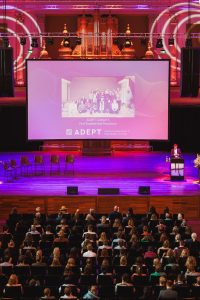
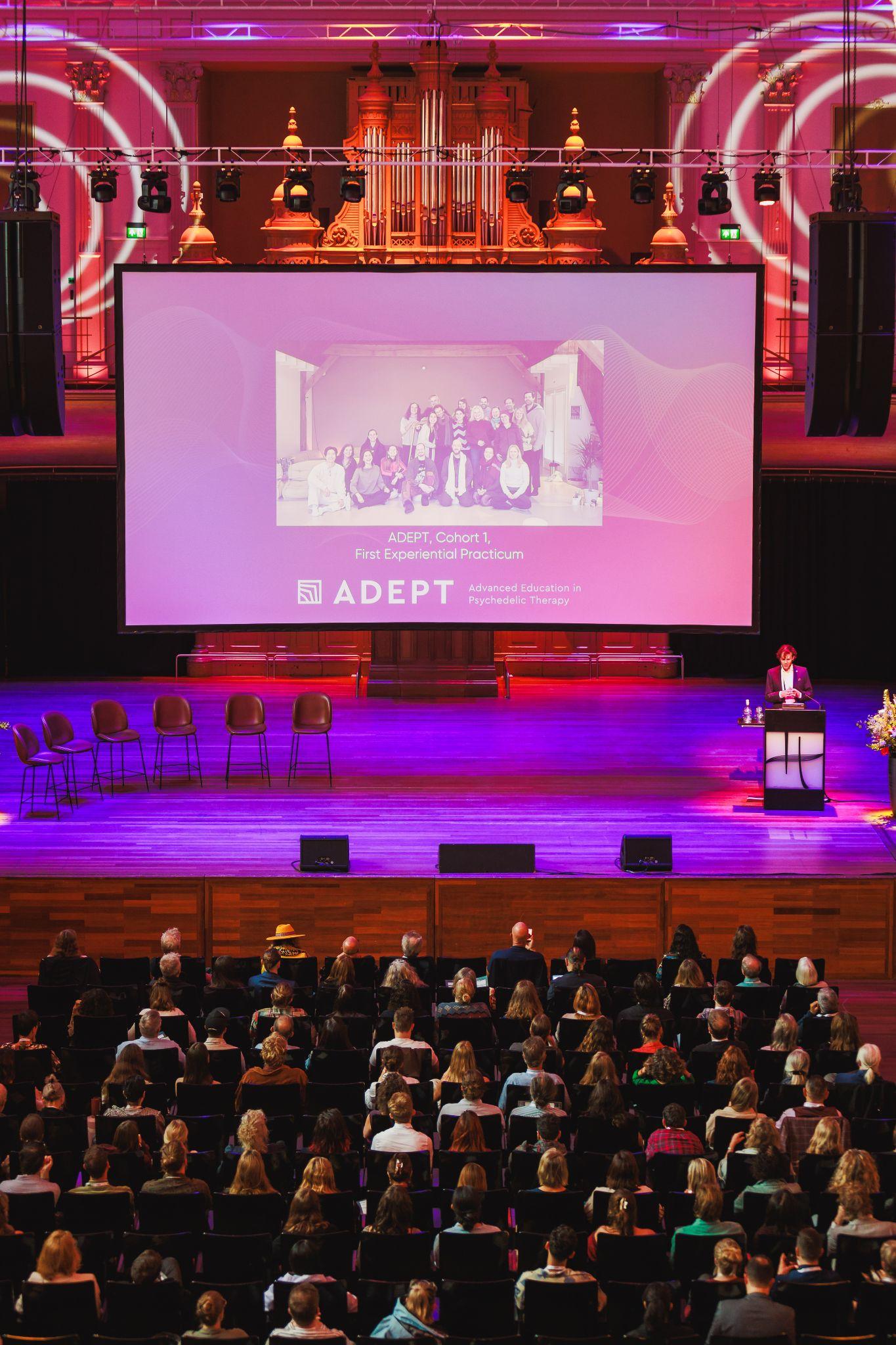
At the latest Interdisciplinary Conference on Psychedelic Research (ICPR 2026), sessions explored what psychedelic-assisted therapy demands of practitioners, spanning clinical practice, ethics, culture, and training.
The overriding takeaway? The therapist matters at least as much as the substance.
While no single credential or rigid method defines good practice, a clear pattern kept appearing across speakers: a good therapist is present and open with the person in front of them, knows their own blind spots, and does not work alone.
This digest follows that pattern through a selection of sessions and builds on the September article, which reviewed evidence that outcomes depend less on the drug than on what therapists do, from the therapeutic alliance to set and setting, and noted that training standards still lag.
It draws on ICPR’s recordings and slides of selected sessions, OPEN’s interviews with speakers, and OPEN’s own analysis of a recent Dutch disciplinary ruling.
Where a session is described from its abstract rather than the recording, the text says so.
Takeaways
- Presence matters as much as technique. One speaker described trust as central to psychedelic-assisted therapy (PAT) and long silences in which no method applies an important therapeutic skill.
- After a hard experience, people want to be heard, not labelled. In one study of people with lasting difficulties, participants described therapy that felt invalidating or pathologising.
- Therapists need to notice their own blind spots. Speakers described how a practitioner’s own needs and feelings can shape the work.
- Working alone is a risk. Speakers on several panels argued for supervision, peer support and apprenticeship.
- A legal substance does not make a practice permitted. A Dutch board held a psychologist responsible for her professional conduct, although psilocybin truffles are legally sold in the Netherlands.
- ICPR did not settle what good training looks like. There is still no agreed standard.
What does ‘the work’?
Several sessions asked what, apart from the substance, shapes the outcome. They pointed to the same idea: what happens between therapist and client matters at least as much as the drug.
Common factors. Common factors are the ingredients shared by all forms of psychotherapy, whatever the method, such as trust, empathic attention and authenticity. In PAT, Goodwin et al. (2024) attributed the effects to the drug itself, while Gründer et al. (2024) argued that treatment with psychedelics is psychotherapy. In his talk, Peter Gasser said trust, empathy and authenticity get too little attention in that debate. He called trust central to PAT, both a prerequisite and a goal, and noted that manuals say preparation builds trust but rarely say what that means. During the acute phase, he said, there are often long silences in which no method applies, and he quoted Michael Mithoefer’s remark that the most important thing a PAT therapist has to learn is to be quiet. Because patients’ awareness is heightened, he argued, they become more susceptible to the therapist’s trustworthiness, empathy, authenticity and integrity.
Meaning. Christopher Timmermann presented neuroscience evidence from DMT and 5-MeO-DMT research that psychedelic experiences, and their later effect on mental health and wellbeing, rely on deconstructing and then reconstructing meaning. In his talk, he argued that the reconstruction may matter more than the immediate effects, and that how an experience is interpreted can decide whether it is therapeutic or damaging. One reading: because meaning-making comes later in the experience, where a therapist’s contribution would count most, integration is part of the treatment, not an add-on.
Context and expectations. According to its abstract, the symposium “From experience to outcome” starts from the view that outcomes cannot be explained by pharmacology alone, and lists context and setting among the processes it examines. Within this symposium, Helena Aicher’s talk gave an overview of how PAT is practised in Switzerland. She treated the setting as more than the room: who the therapists are, the music, the surroundings, and whether treatment is individual or in a group. She said it is important to be pragmatic about what works with which patients and therapists, and that 13 of 19 Swiss practitioners surveyed always include a co-therapist. In an interview with OPEN, Aicher added that high hopes among patients, therapists and researchers can shape outcomes, and that therapists need to handle disappointment when people hope for a quick fix.
When things go wrong
Several sessions discussed what happens when an experience goes badly: how people want to be met afterwards, how a therapist can respond in the moment, and how the therapist’s own blind spots can make things worse.
A study of therapy after difficult experiences. The September article covered how therapists support clients through challenging moments during a session. This study looks at what came afterwards, from the perspective of people who sought therapy after difficult naturalistic psychedelic use. Guy Simon analysed interviews with 35 adults who saw a psychotherapist after significant distress using psilocybin, ayahuasca, or LSD. Their preprint (Simon et al., 2026) reports four themes. The authors argue that what people needed was psychedelic-informed therapy, a middle position between a new modality and minor adjustments to standard therapy. Their discussion links most of the themes to specific competencies, shown in Table 1.
Table 1. The preprint’s four themes after difficult psychedelic experiences, and the competencies it links to them
| Theme in the preprint | What the preprint says therapists need |
|---|---|
| 1. Friction in standard therapeutic settings Encounters felt misaligned or invalidating, with reductionist or pathologising readings of the experience. |
|
| 2. Desired therapeutic qualities and knowledge Unmet needs for therapeutic knowledge and relational competency regarding altered states, ontological ambiguity and non-linear change. | Ontological competency: engaging with non-materialist or existentially challenging interpretations without treating them as pathological |
| 3. Self-directed and informal support pathways Turning to informal support when professional care felt unavailable or unsafe. | No competency. The authors suggest clinical services could work alongside community-based integration circles and peer support |
| 4. Non-linear recovery and therapeutic fit A mismatch between people’s recovery trajectories and clinicians’ expectations of symptom stabilisation. | Temporal flexibility: recovery may not be linear, and instability does not always mean worsening |
Note. The pairing is an arrangement of the preprint’s discussion; the authors do not present it as a table. Somatic literacy, meaning attunement to the body, is a sixth competency not tied to a single theme. Source: Simon et al. (2026), preprint.
This study’s sample was selected for lasting difficulties, and the findings are participants’ perceptions, not outcomes. Several participants also said a therapist’s own familiarity with altered states could have helped, mainly as a safeguard against pathologising.
A panel across settings. The panel “Between breakdown and breakthrough” considered difficult experiences in clinical, ceremonial and festival settings. According to its abstract, it questions the idea that challenging experiences are inherently therapeutic and aims to avoid both romanticising and pathologising them. During the panel, Max Wolff called challenging and adverse experiences overlapping, and defined adverse by prolonged functional impairment. Abigail Calder stressed preparation: reasonable doses, realistic expectations, and being open about risks, such as mild flashbacks, so that people are not frightened by them. Calder said this openness also protects the therapeutic relationship if a session goes badly. In difficult moments, speakers favoured gentle, minimal intervention, such as grounding, humour, soft contact and time to land, rather than rushing people to medical or psychotherapeutic help.
Shadow, inflation and bypassing. Maria Papaspyrou introduced the Jungian idea of the shadow, the parts of the self a person disowns, in the symposium on Jungian perspectives. She named three risks in integration work:
Table 2. Three risks in integration work, from Maria Papaspyrou’s talk
| Risk | What it looks like | What the practitioner asks or looks for |
|---|---|---|
| Inflation | The experience gathers around the ego, certainty sets in, and questioning cannot be tolerated. | Is there an unmet need to be special? A hunger for recognition that has found sacred language? |
| Projection | What I cannot bear to recognise in myself, I begin to see outside. Participants idealise the facilitator, who becomes grandiose and disempowers the participant’s own psyche. | Why this intensity? Why this certainty? It becomes dangerous when no one recognises the projection as projection. |
| Bypassing | Using spiritual, therapeutic or psychedelic language to avoid ordinary human responsibility. Process matters more than impact, honesty replaces accountability, or “the medicine told me” overrides consent, repair or restraint. | Shadow is not integrated by becoming nicer, which is only another persona. It is integrated when the ego can bear a more truthful relationship to its own motives, affects and power. |
Note. Paraphrased and quoted from the talk slides. Source: Papaspyrou, ICPR 2026 Jungian panel, “Working with Shadow in Expanded States”.
Her central point was that visibility is not integration. Something can be revealed and still be unconscious in its meaning. In her talk, she argued that shadow in professional containers can manifest as a healer who wants to be special, or a therapist who believes they are always right. That does not make them a bad person. Their shadow has simply found a professionally respectable container. Psychological language, she suggested, can make this harder to see. In an interview with OPEN, she added that the dosing session is only one part of the work next to preparation and integration. She also noted that the field is moving from excitement to a more sober view.
Boundaries and professional responsibility
Practitioners stay responsible for their conduct even where the rules are unclear, and both a study and a recent Dutch ruling addressed that point.
Erotic transference and touch. Pat Song‘s interview study of 20 practitioners and participants looked at erotic feelings in PAT. In the psychodynamic framework Song uses, sexual feelings in therapy usually point to non-sexual feelings and experiences, so they carry useful clinical information. Song said psychedelics can amplify erotic transference and attachment. Practitioners described noticing their own erotic countertransference and acknowledging it without shame and without acting on it. All but one said their training on therapeutic touch was inadequate, and supervision that was both psychodynamically and psychedelically informed was hard to find.
A Dutch ruling. On 8 May 2026 the Amsterdam Healthcare Disciplinary Board conditionally suspended a clinical psychologist, in a case brought by the Health and Youth Care Inspectorate (IGJ). According to OPEN’s analysis, she had allowed a long-term patient with complex trauma and dissociative identity disorder to take psilocybin truffle tea before sessions, completed a short preparatory course without her manager’s consent, and later offered a truffle retreat as a coach. The board held that she bore full professional responsibility even though the patient took the initiative. Psilocybin truffles are legally sold in the Netherlands, but the board found that using them in standard care, without recognised guidelines, did not meet professional standards. It also criticised the lack of consultation with colleagues and poor record-keeping. OPEN reads the case as a structural problem and argues for guidelines, safety frameworks and accredited training.
The panel “Psychedelic therapy and the boundaries of professional responsibility: Reflections on a recent Dutch disciplinary case“, moderated by Metten Somers, described itself as an open reflection on professional responsibility from ethical, legal and regulatory perspectives. Tonnie Prinsen-Reinders, who sits on the Amsterdam disciplinary tribunal, summarised the board’s reasoning: psilocybin is still experimental, and the patient’s earlier positive experience and the therapist’s trust did not justify an exception. Lawyer Wietse Rypkema said he was not advocating that the therapist did everything right but was moved that she had listened to her patient. Tadeusz Hawrot warned that combining psychotherapy with drugs that increase suggestibility can amplify a therapist’s potential to do harm, and that being a licensed psychotherapist is not enough. He named working alone as one of the biggest risk factors, and said situations such as a client wanting a hug are ones to discuss with colleagues.
Culture and the therapist as a person
Every therapist brings a cultural frame to the work. Two sessions asked what that means for practice.
Rwanda. Lisa Ndejuru presented a practice-based study of ketamine-assisted psychotherapy in Kigali, developed together with Rwandan knowledge holders. Her argument was that cultural attunement is clinical infrastructure, not a matter of being nicer in delivery. She warned against stereotypes: people are not simply relational where Westerners are individual. A clinician therefore cannot arrive knowing how relational a person is; the stance is to stay near, not to know in advance. At intake, the Western-trained clinicians ask how the person understands the cause of their suffering before reaching for a diagnostic category. Results are preliminary and come from an open-label cohort without a comparator. The model was condensed from six levels to three: the person, the clinician and the system.
A Western lineage. According to its abstract, the panel “Toward a western psychedelic practice lineage” starts from a gap: psychedelic care is expanding, yet foundations of practice and educational pathways remain uneven. Panellists were wary of the word lineage and of borrowing from other cultures. Duncan Still described a careful line between appropriation and learning from wisdom keepers. Simon Ruffell said the first question for Western practice is what psychedelic care is for and what wound it addresses. On training, a panellist argued for an apprenticeship model, with practitioners supervised by experienced people before they work alone, and the others appeared to agree.
Training and a maturing field
Training came up frequently, yet ICPR did not settle what good training looks like. One panel addressed it directly: “Training the next generation of psychedelic therapists,” with Janis Phelps, Helena Aicher, Claire Kullack, Daan Keiman and Dea Siggaard Stenbæk:
- Who is trained. Claire Kullack described a programme for licensed health professionals who already have experience with complex PTSD, dissociative disorders and other complex conditions. Helena Aicher asked who should be invited to training at all, noting that what counts as psychotherapy differs across cultures, and even within Switzerland.
- Learning with real clients. Kullack’s trainees follow a real client through the whole therapy alongside an experienced psychedelic-assisted therapist, with supervision built in.
- Psychotherapy or support? Aicher asked what separates psychotherapeutic support from psychotherapy and said that people trained in studies that allowed personal experience still did not know how to embed this in a longer psychotherapeutic process.
So, what makes a good psychedelic therapist?
Across these sessions, what mattered was less a credential than three things:
- Being present and open. Gasser described long silences in which no method applies, Simon’s participants wanted clinicians who did not pathologise their experience, and Ndejuru said a person’s relationality has to be met, not assumed.
- Knowing oneself. Papaspyrou’s slides describe shadow finding a “professionally respectable container”, and Song’s practitioners described noticing erotic countertransference without acting on it.
- Not working alone. Supervision and apprenticeship came up on the lineage, Dutch-ruling and training panels, and a speaker on the Dutch panel named working alone as one of the biggest risk factors.
What stays open is how therapists should be trained to do this. The Dutch ruling and the lineage panel both point to standards that trail demand, and one speaker said a psychotherapy licence alone is not enough.
The early steps towards a career in Psychedelic Therapy can be taken through the Foundations of Psychedelic Therapy course – an online program to learn the essentials of it – and for mental health professionals, we offer the Advanced Education in Psychedelic Therapy (ADEPT) – a 2-year accredited training program blending online learning with in-person experientials.
This is a reading across the sessions, not a conclusion any speaker drew. It also has limits. Most of the material presented is practitioners’ views and small, early-stage studies, and no session reviewed here tested which therapist qualities predict outcomes. So, this digest describes what ICPR speakers said a good therapist needs, not what has been shown to work.
ICPR returns in 2028. In the meantime, many ICPR 2026 talks can be watched on the OPEN Foundation ICPR YouTube channel, and OPEN’s training pathway continues with Foundations of Psychedelic Therapy and ADEPT.
References
Aicher, H., Prinz, S., Soto Angona, Ó., & Wolff, M. (2026, June 4). From experience to outcome: Psychological change processes in psychedelic research [Symposium abstract]. ICPR 2026, Haarlem, the Netherlands. https://www.icpr-conference.com/programme/from-experience-to-outcome-psychological-change-processes-in-psychedelic-research-recbpcy
Calder, A., Keiman, D., Hartman, R., de Vos, C., & Wolff, M. (2026, June 6). Between breakdown and breakthrough: Challenging psychedelic experiences across contexts [Panel abstract]. ICPR 2026, Haarlem, the Netherlands. https://www.icpr-conference.com/programme/between-breakdown-and-breakthrough-challenging-psychedelic-experiences-across-contexts-rechbfh
Gasser, P. (2026, June 4). Common factors of psychotherapy in psychedelic-assisted therapy (PAT) [Conference abstract]. ICPR 2026, Haarlem, the Netherlands. https://www.icpr-conference.com/programme/common-factors-of-psychotherapy-in-psychedelic-assisted-therapy-pat-rectw0d
Goodwin, G. M., Malievskaia, E., Fonzo, G. A., & Nemeroff, C. B. (2024). Must psilocybin always “assist psychotherapy”? American Journal of Psychiatry, 181(1), 20–25. https://doi.org/10.1176/appi.ajp.20221043
Gründer, G., Brand, M., Mertens, L. J., Jungaberle, H., Kärtner, L., Scharf, D. J., Spangemacher, M., & Wolff, M. (2024). Treatment with psychedelics is psychotherapy: Beyond reductionism. The Lancet Psychiatry, 11(3), 231–236. https://doi.org/10.1016/S2215-0366(23)00363-2
Ndejuru, L. (2026, June 5). Cultural attunement as clinical infrastructure: Relational lessons from ketamine-assisted psychotherapy in Rwanda [Conference abstract]. ICPR 2026, Haarlem, the Netherlands. https://www.icpr-conference.com/programme/cultural-attunement-as-clinical-infrastructure-relational-lessons-from-ketamine-assisted-psychotherapy-in-rwanda
Oexemann, D. (2026, September 16). What makes a good psychedelic therapist? OPEN Foundation. https://open-foundation.org/what-makes-a-good-psychedelic-therapist/
OPEN Foundation. (2026a, May 20). Truffles, therapy, disciplinary law: An OPEN perspective on the grey area in which (licensed) therapists operate in the Netherlands with regard to psychedelics. https://open-foundation.org/truffles-therapy-disciplinary-law/
OPEN Foundation. (2026b, August 13). ICPR 2026 – Psychedelic therapy as the reconstruction of meaning by Chris Timmermann [Video]. YouTube. https://www.youtube.com/watch?v=TZ8OpOqgBF8
OPEN Foundation. (2026c). Guy Simon | ICPR 2026 | OPEN Foundation [Video]. YouTube. https://www.youtube.com/watch?v=qgA7NOQZHvI
OPEN Foundation. (2026d). Helena Aicher | ICPR 2026 | OPEN Foundation [Video]. YouTube. https://www.youtube.com/watch?v=3veyAB1AaoE
OPEN Foundation. (2026e). Maria Papaspyrou | ICPR 2026 | OPEN Foundation [Video]. YouTube. https://www.youtube.com/watch?v=EHCafqROtho
Papaspyrou, M., Tadmor, N., Cohen, I., & Sopanen, J. (2026, June 6). Jungian perspectives on psychedelic experience: Dynamics, integration, and education [Symposium listing]. ICPR 2026, Haarlem, the Netherlands. https://www.icpr-conference.com/programme/jungian-perspectives-on-psychedelic-experience-dynamics-integration-and-education
Phelps, J., Aicher, H., Kullack, C., Keiman, D., & Siggaard Stenbæk, D. (2026, June 6). Training the next generation of psychedelic therapists [Panel listing]. ICPR 2026, Haarlem, the Netherlands. https://www.icpr-conference.com/programme/training-the-next-generation-of-psychedelic-therapists-recmwk3
Ruffell, S., Mosemghvlishvili, L., Still, D., & Keiman, D. (2026, June 4). Toward a western psychedelic practice lineage: Standards, care, and the future of practitioner education [Panel abstract]. ICPR 2026, Haarlem, the Netherlands. https://www.icpr-conference.com/programme/toward-a-western-psychedelic-practice-lineage-standards-care-and-the-future-of-practitioner-education-recweh0
Simon, G. (2026, June 4). When therapy falls short: A qualitative study of psychotherapy after challenging experiences and the need for psychedelic-informed therapy [Conference abstract]. ICPR 2026, Haarlem, the Netherlands. https://www.icpr-conference.com/programme/when-therapy-falls-short-a-qualitative-study-of-psychotherapy-after-challenging-experiences-and-the-need-for-psychedelic-informed-therapy
Simon, G., Tadmor, N., Evans, J., Luke, D., & Luoma, J. B. (2026). When therapy falls short: A qualitative study of psychotherapy after challenging psychedelic experiences [Preprint]. Research Square. https://doi.org/10.21203/rs.3.rs-9695196/v1
Somers, M. (Moderator). (2026, June 4). Psychedelic therapy and the boundaries of professional responsibility: Reflections on a recent Dutch disciplinary case [Panel abstract]. ICPR 2026, Haarlem, the Netherlands. https://www.icpr-conference.com/programme/psychedelic-therapy-and-the-boundaries-of-professional-responsibility-reflections-on-a-recent-dutch-disciplinary-case
Song, P. (2026, June 5). Erotic feelings in psychedelic-assisted therapy: What practitioners tell us, and implications for practice [Conference abstract]. ICPR 2026, Haarlem, the Netherlands. https://www.icpr-conference.com/programme/erotic-feelings-in-psychedelic-assisted-therapy-what-practitioners-tell-us-and-implications-for-practice-recy6t7
Timmermann, C. (2026, June 4). Psychedelic therapy as the reconstruction of meaning [Keynote abstract]. ICPR 2026, Haarlem, the Netherlands. https://www.icpr-conference.com/programme/psychedelic-therapy-as-the-reconstruction-of-meaning-rec2zfb
AUTHOR
Dilara Meral Oexemann
Dilara is an early-career researcher and science communicator based in Berlin with a master’s degree in clinical psychology from Erasmus University Rotterdam. Her thesis examined the effects of dose, personality, and emotional breakthrough on the persisting outcomes of psychedelics, and she is currently preparing this work for journal publication.
She contributes to Blossom, where she helps maintain their research database and review clinical trials. Additionally, she is trying to get involved in the psychedelic research landscape in Europe.
Her interests centre on individual differences in psychedelic response, mechanisms of psychedelic use, and how personality and relational factors influence psychedelic outcomes.